What To Wear In Marrakech Desert Tours
What should you wear in the Sahara from Marrakech? You’ll need both summer and winter layers - learn what to pack for heat, cold nights, and desert conditions.
Match your packing to the route: a camel trek and overnight stay need different preparation from an Agafay evening.
Booking Choice: Two nights in Merzouga, camel rides, sandboarding and a nomad visit; choose Deluxe Camp for a private bathroom. Explore Four Days, Two Desert Nights
| Large cotton scarf (chèche) | Essential | Face and neck on camel ride, sun protection, warmth after dark |
| Loose long-sleeved top (linen or cotton) | Essential | Light colors – sun protection and cultural respect |
| Loose long trousers | Essential | Protects legs on camel, sun protection, modesty in villages |
| Warm fleece or jacket | Essential Oct–March | Temperature drops fast after sunset – colder than most expect |
| Closed-toe shoes (trail or hiking) | Essential | Already broken in – sand fills open shoes instantly |
| Wide-brimmed hat or cap | Essential | Desert UV regularly exceeds index 12 |
| Sunglasses (UV protection) | Essential | Polarised preferred – sand reflection amplifies glare |
| Thermal base layer | Recommended Dec-Feb | December and January nights can touch near-freezing |
| Camp sandals or flip-flops | Optional | Evening comfort at camp – not for dune walking |
| SPF 50+ sunscreen + lip balm | Essential | Desert UV is intense year-round; bring from home |
Clothing guidance verified April 2026
What Should You Wear In The Marrakech Desert?
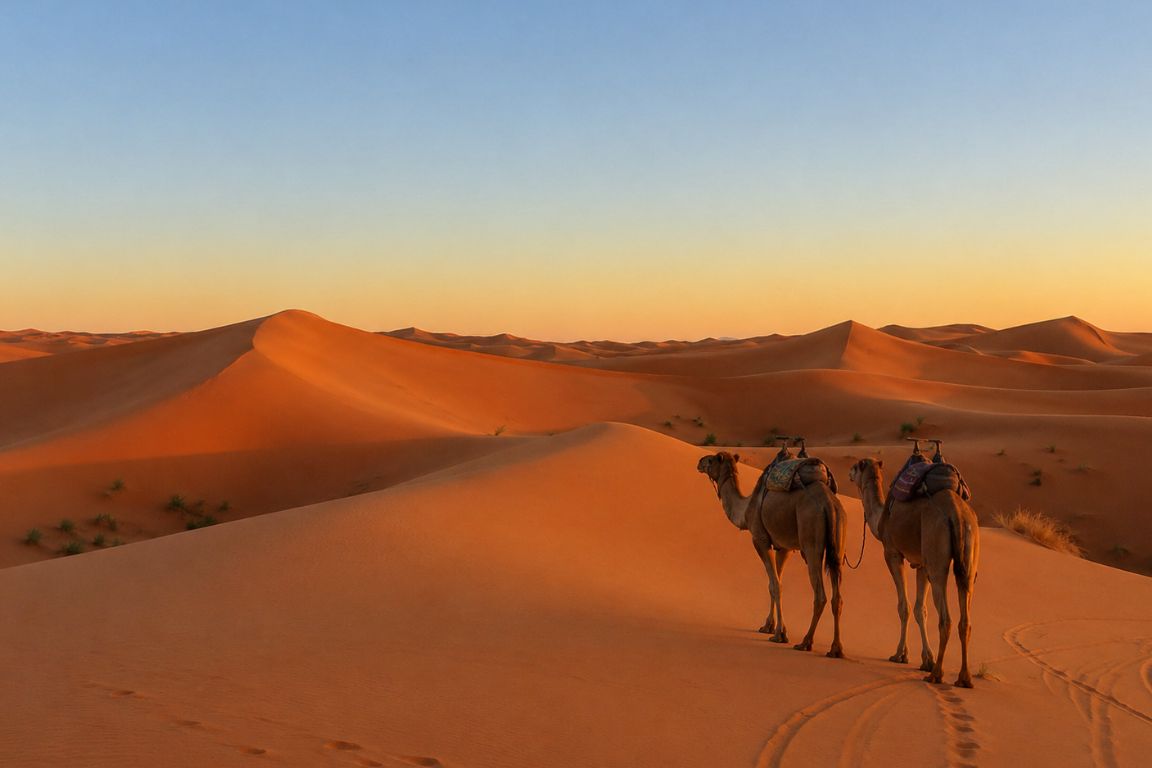 The single most important thing to understand about dressing for the Marrakech desert is that you need to pack for two completely different climates that exist in the same day. Desert afternoons in shoulder season can reach 30°C. The same desert at midnight can be 8°C. By January, pre-dawn temperatures regularly touch near-freezing. Light, loose, breathable layers for the daytime; proper warm clothing for after sunset. Both are non-negotiable.
Most travelers pack for the desert they imagine – hot, bright, sandy – and forget about the desert they’ll actually sleep in, which is cold, dark, and windier than any daytime hour suggests. This mismatch is the single most consistent piece of feedback we receive from travelers returning from Erg Chebbi: the heat during the camel ride was manageable, but the night was genuinely cold and they weren’t prepared. A fleece, a thermal layer, and a warm hat are not optional if your trip falls between October and March.
The second principle is cultural. Morocco is a Muslim-majority country, and the Berber villages and small towns you pass through on the route from Marrakech to the desert are conservative communities where modest dress is both respectful and practically smart. Covering shoulders and knees – for both men and women – is the baseline. This isn’t about restriction. Loose, long-sleeved linen actually keeps you cooler in desert heat than exposed skin, because the fabric creates a layer of still air that insulates against the sun’s direct intensity. The Berber guides who lead your camel ride wear full-length, loose robes in the hottest months. There’s several thousand years of desert-tested logic behind that choice.
The third principle: pack light and pack practical. The desert is not a fashion context. Sand gets into everything – pockets, camera bags, shoes, the lining of jackets. Your best clothes should stay in Marrakech. A soft duffel bag with the specific items listed in this guide is everything you need. We’ve guided over 9,100 travelers through this experience since 2008, and the travelers who arrive most comfortable are almost always the ones who packed the least and chose the right items rather than the most items.
What To Wear On A Camel Ride In The Sahara Desert
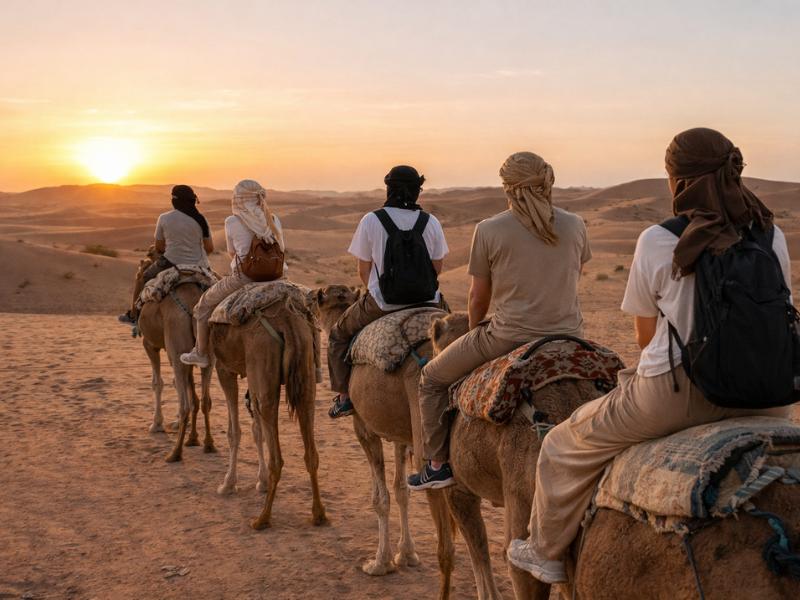
For the camel ride, wear loose long trousers, a long-sleeved top in a breathable fabric, closed-toe shoes, a large scarf wrapped around your face and neck, a hat, and sunglasses. The camel saddle sits between your thighs and inner legs for the duration of the ride – loose trousers with some structure (not thin leggings) are significantly more comfortable than tight or thin fabrics. Everything should have secure pockets or be in a bag strapped to the camel.
The camel ride practical reality catches a lot of travelers off-guard. You can’t dismount once you’ve started – the camel is led by rope and only sits at the handler’s command at the start and end of the ride. Anything that falls overboard is gone. Things that fall: phones without wrist straps, sunglasses not strapped down, money from open pockets, scarves that aren’t secured. Zip-close pockets or a small crossbody bag worn under your outer layer keep everything safe. A phone held in hand for photos should have a wrist strap. This is not excessive caution – our guides collect dropped items from the sand regularly.
The saddle chafes against the inner leg over a long ride. Thin leggings, light summer trousers, or shorts leave the skin exposed to this friction and you’ll feel it by the end. Cargo trousers, loose cotton pants, or structured linen trousers with some weight to them provide the right barrier. Jeans work but are hot in warmer months; they’re the better choice in November through February when warmth matters more than ventilation.
The scarf – called a chèche or shesh in Morocco – is the most important item on the camel ride and the one travelers most often underestimate. It wraps around the face and neck, protecting against sun, wind, and sand. In strong winds it becomes a literal shield. In the afternoon sun it provides meaningful shade for skin that would otherwise be directly exposed. Your guide will help you wrap it correctly if you ask. Moroccan markets in Marrakech sell quality cotton chèches for a few dollars – buy one before leaving the city if you don’t have one. The traditional blue or white is not just aesthetic: it’s what works.
One note on photography during the camel ride: the light in the late afternoon is extraordinary, and everyone wants to capture it. A camera with a neck strap worn under the outer layer, retrieved only when the camel has stopped, is the safest approach. Phones tucked in a zip pocket and pulled out carefully while holding the saddle horn is the other option. The camel ride is genuinely photogenic. It’s also genuinely moving at all times. Manage the trade-off consciously.
What To Wear At A Desert Camp At Night
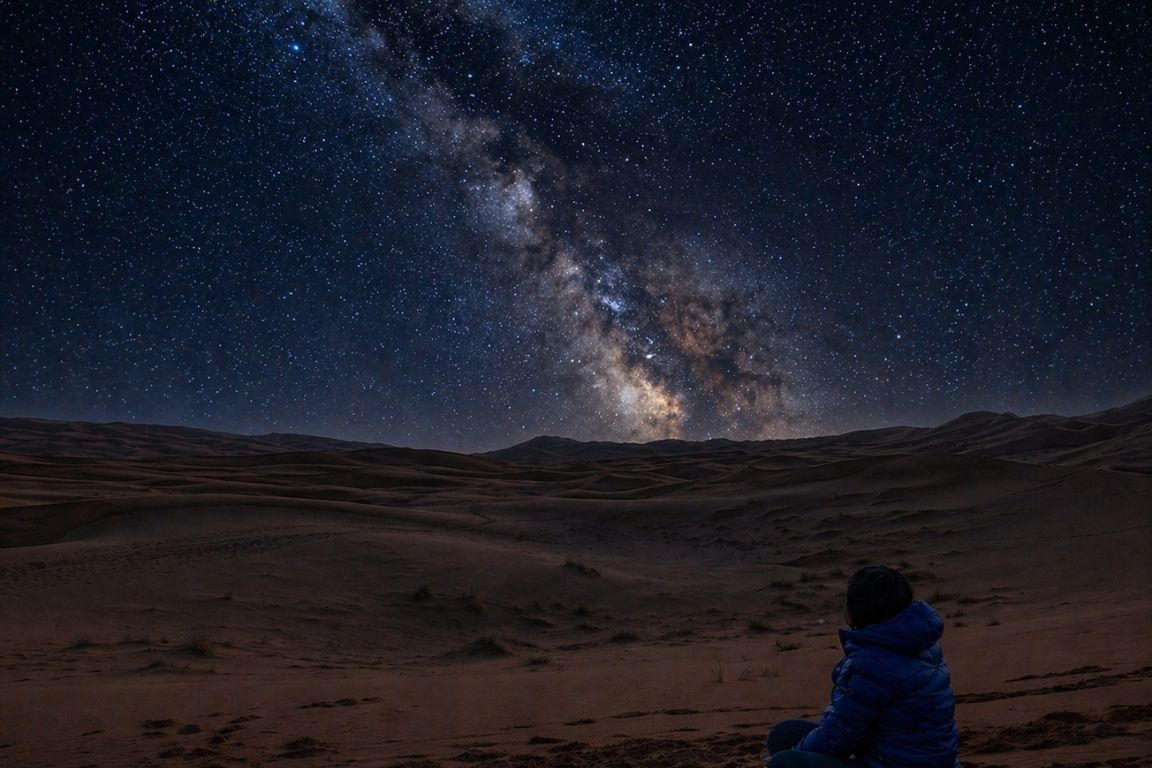 After sunset at the desert camp, the temperature drops faster than almost every first-time visitor expects. By 10 pm in October, temperatures at Erg Chebbi can be 10°C below the afternoon high. By January, pre-dawn temperatures regularly touch near-freezing. For the evening fire and dinner, you need a warm mid-layer – a fleece or insulated jacket. For sleeping, a thermal base layer and warm socks matter from October through March. The sunrise camel ride at 5 am in winter requires gloves.
The campfire and evening music create warmth at a small radius. Beyond that circle, the desert cold is real and it arrives fast. The transition happens during dinner – most travelers arrive at camp in afternoon heat, eat dinner in a pleasant cool evening, and then notice at around 9 or 10 pm that the temperature has dropped through another 5-8 degrees. The people who have a fleece in their bag at this moment are warm and relaxed. The people who don’t are hunting through their luggage while everyone else is watching the stars.
The layering system that works for a desert camp night in shoulder season (October, November, March, April): a light base layer (cotton or merino t-shirt), a mid-layer (long-sleeved top or thin fleece), and an outer layer (proper fleece or down jacket). Three layers, all lightweight, all packable. Add a hat and you’re comfortable from dinner through midnight. For December, January, and February: add thermal leggings or long underwear for sleeping, wool socks, and gloves for the 5 am sunrise ride.
Some luxury camps have heating in the tents for winter months. Most standard camps do not. The camp provides blankets – at quality camps, heavy wool blankets that manage the cold effectively. At basic camps, the blanket quality varies. Bringing a lightweight merino wool thermal top to sleep in, regardless of camp tier, is the single most useful winter addition to any desert packing list. It weighs almost nothing, packs flat, and makes a genuine difference at 3 am when the cold wakes you.
Every trip we run includes a pre-departure briefing that covers exactly what to wear for the season and camp you’ve booked. Review the 3-day Sahara tour to Merzouga and Erg Chebbi for packing guidance matched to your travel dates.
Wondering what a typical evening at a Sahara camp looks like from sunset to sunrise and what’s included beyond the tent? This Marrakech desert camp experience in Morocco guide covers the details most tour descriptions keep deliberately vague.
How To Dress For The Drive From Marrakech To The Sahara
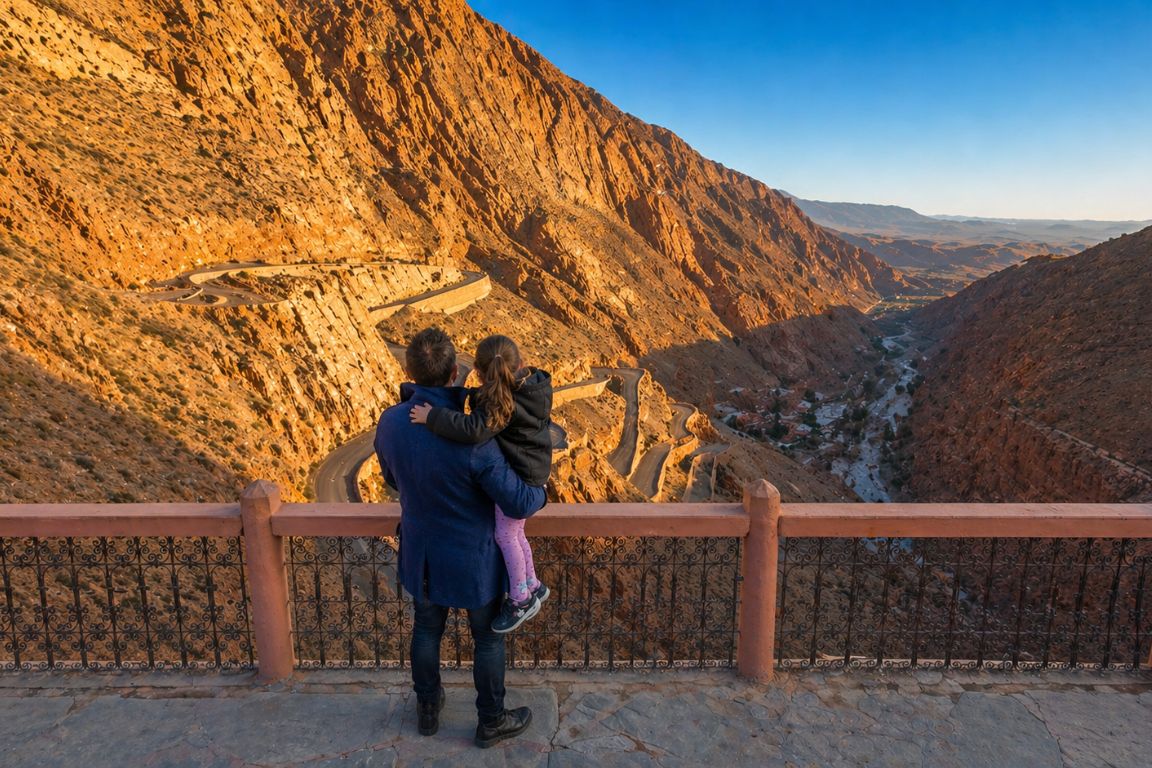 The 9-10 hour drive from Marrakech to Erg Chebbi passes through multiple climate zones – city heat in Marrakech, mountain cold at the Tizi n’Tichka pass (2,260 metres elevation), warm valleys, and the pre-desert south. Dress in comfortable layers you can add and remove. Long trousers, a light long-sleeved top, and a layer in your bag for the Atlas crossing covers everything. Avoid tight clothing for a long car journey. Bring a scarf even in the car, it’s useful as a blanket, a neck pillow, and at every village stop.
The Atlas crossing is the section that surprises people most. Marrakech in September can be 35°C. The Tizi n’Tichka pass at the same time of year can be 15°C with wind. If you’re in a private vehicle and stop for photos at the pass – which is genuinely spectacular – the temperature change is immediate and significant. A light jacket or cardigan accessible from your day bag (not buried in luggage in the boot) makes this stop comfortable rather than shivery.
Comfortable loose trousers matter on the drive as much as in the desert itself. Nine hours in a car in tight jeans is a specific kind of discomfort that compounds with every hour. Lightweight cargo or linen trousers in a relaxed fit are the right choice. Wear the same trousers you’ll wear on the camel ride – one less item to change when you arrive.
At village stops along the route, and there will be several, for fuel, lunch, bathroom breaks, and sightseeing at Aït Benhaddou – modest dress matters. The communities in the Dadès Valley and approaching Merzouga are conservative. A long-sleeved top with covered shoulders and knees is the standard. You won’t be asked to cover up, but you’ll be received with more warmth and less attention in appropriate clothing.
The distance between Marrakech and the Sahara catches most visitors off guard – our how to visit the Sahara Desert from Marrakech desert tours guide breaks down the realistic options for getting there and back.
What Do Women Need To Know About Dressing For The Sahara?
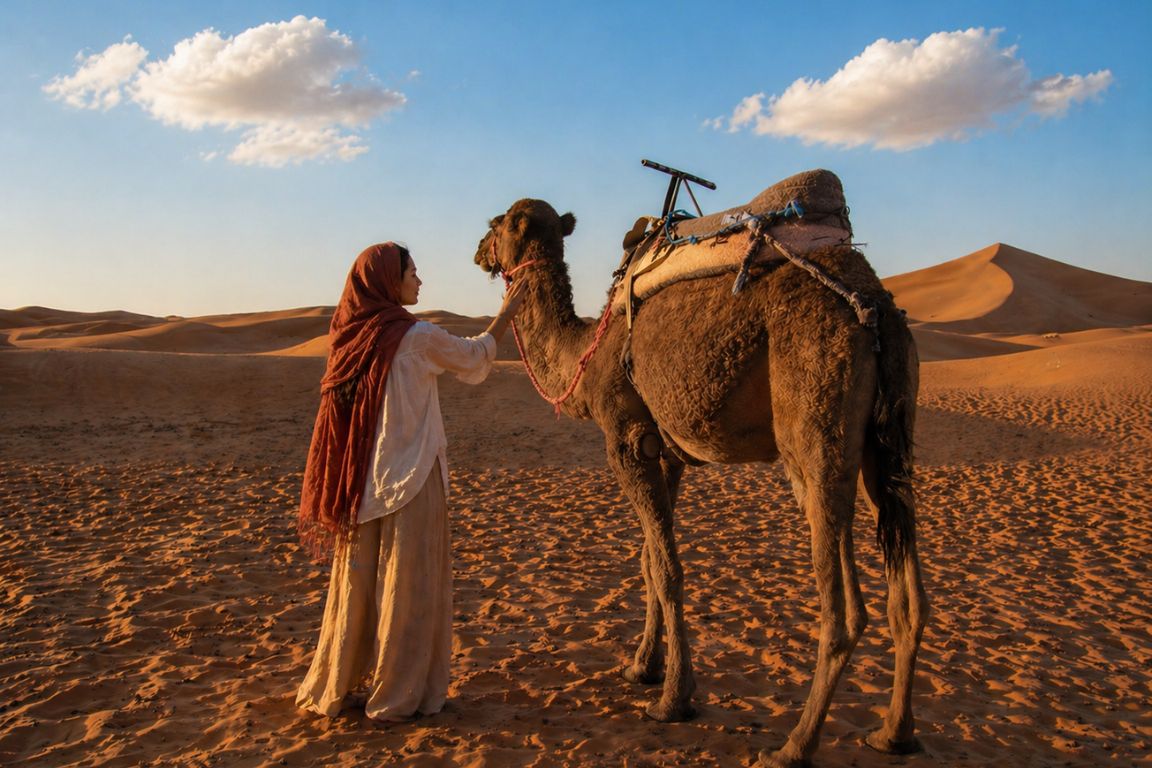 Women visiting the Moroccan desert have the same practical requirements as men – loose layers, a scarf, closed shoes, warm clothing for nights – with the addition of modest dress being both culturally important and practically advantageous throughout the journey. Covering shoulders and knees in Berber villages and small towns along the route is respectful and results in noticeably warmer interactions with locals. In the dunes at the camp, the dress code relaxes considerably.
The cultural context is important to understand clearly. Morocco is not a country with mandatory dress codes for tourists, and you will not be compelled to cover your hair or wear specific garments. But the towns and villages on the route from Marrakech to Merzouga are traditional Berber communities where modest dress is the cultural norm. Women in sleeveless tops or shorts in these communities draw attention they may not want. Women in loose long-sleeved tops and long trousers or skirts are treated as ordinary guests, which makes the journey more comfortable and the interactions more genuine.
At the desert camp itself, dress is more relaxed. At Erg Chebbi’s camps, a light dress or skirt in the evening is perfectly appropriate. Many women wear a flowing dress or kimono for the photoshoot on the dunes at sunrise – the light at that hour against the orange sand is extraordinary for photography, and loose, light fabrics photograph beautifully in this environment. The practical advice for this: wear leggings or thin trousers underneath the dress, not only for warmth at 5 am but for the camel ride if you take the sunrise ride back in the dress.
Female-specific practical notes: bring hygiene products from home in sufficient quantity for the trip, as availability in desert towns is limited. A sports bra with a good clasp (not underwire) is more comfortable for the camel ride than a structured underwire bra – the saddle movement affects everything. A runner’s belt worn under outer clothing keeps a phone and small items secure without needing to manage them. And a large scarf worn as a headscarf in villages is a simple gesture that is noticed and appreciated – not required, but welcomed.
What Shoes Should You Wear In The Sahara Desert?
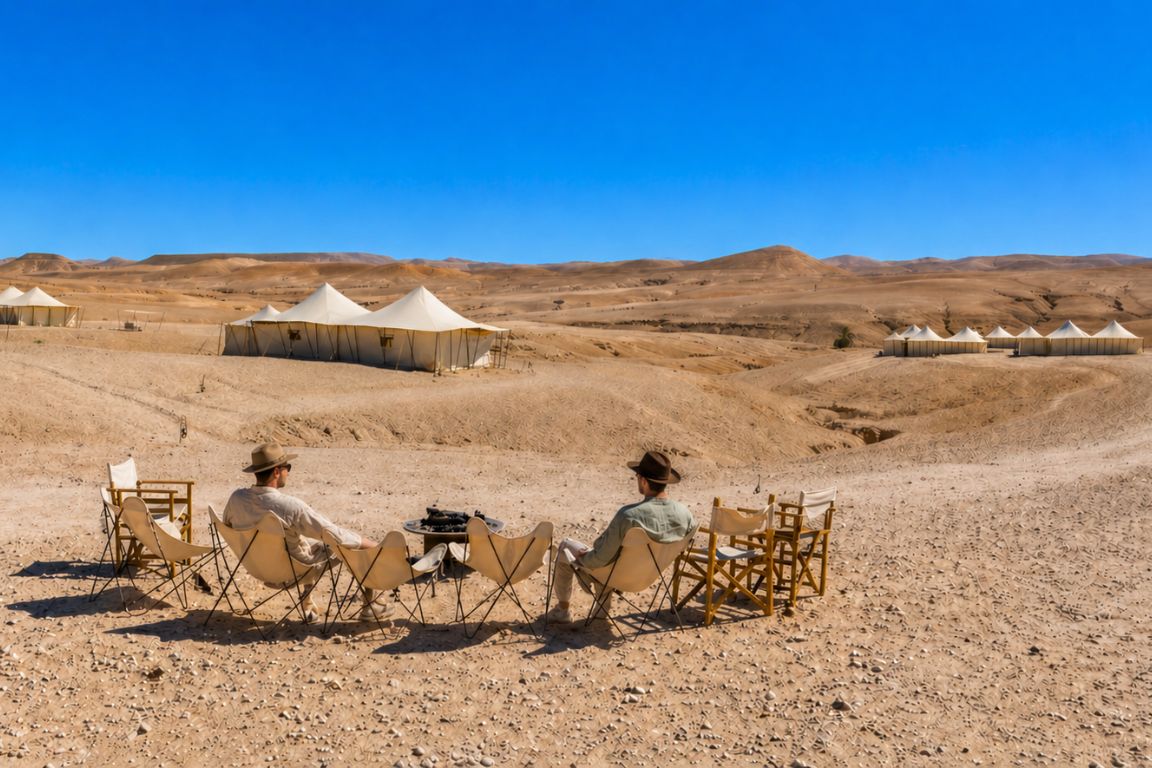 Wear closed-toe shoes that have already been broken in before the trip. Trail shoes or lightweight hiking boots are the best choice – they handle sand, rocky ground, and the camel stirrups without filling with sand immediately. Flip-flops and open sandals are for camp evenings only, not for dune walking or the camel ride. Mesh-top trainers look practical but fill with fine Saharan sand within minutes and never fully empty out.
The Sahara sand is extraordinarily fine – finer than beach sand, finer than most travelers have ever experienced. It finds its way into every opening immediately and thoroughly. Mesh-top sneakers that seem breathable and light become sand repositories within the first dune climb. The sand fills the mesh, weighs the shoe, and cannot be fully removed. This is the most common footwear mistake on desert tours and the one that results in shoes being thrown away after the trip.
What works: closed-toe trail shoes or low hiking boots with a solid upper rather than mesh panels. They don’t need to be heavy – a lightweight trail shoe with a solid synthetic upper, good grip on the sole, and already broken in before the trip is the ideal. The “already broken in” part matters as much as the shoe type: new shoes on sand dunes with long camel rides generate blisters efficiently. Wear any shoes you’re bringing to Morocco on several long walks before you arrive.
Ankle support is genuinely useful for dune climbing – the surface shifts under every step, and the sideways strain on ankles on a steep dune slope is real. A mid-cut trail shoe or a light hiking boot provides this. For travelers doing only the standard sunset and sunrise camel rides with short dune walks, a solid trail shoe with good grip is sufficient. For anyone planning longer dune treks or sandboarding sessions, a proper hiking boot with ankle support is the better choice.
For camp evenings, bring a pair of light sandals or slip-on shoes. After the camel ride and dune walk, your closed-toe shoes come off and you want something easy for the rest of the evening. Flip-flops work fine at camp – the terrain is flat, the sand paths are manageable, and your feet need the rest after a day in closed shoes. Just don’t attempt any dune climbing in them.
What Not To Wear In The Sahara Desert
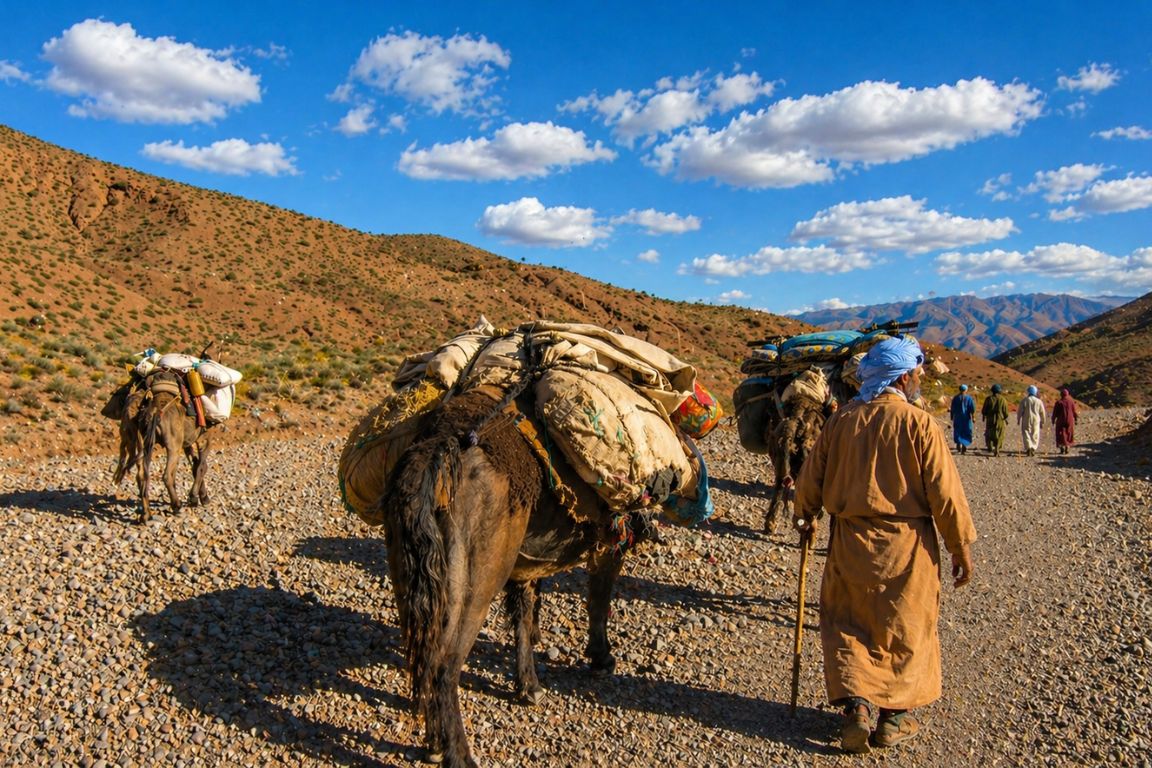 The items that cause the most problems on Sahara desert tours: jeans in summer (heavy, hot, restrictive), mesh trainers (fill with sand immediately), white or light-colored trousers on the camel (camel saddle stains are permanent), revealing clothing in Berber villages (culturally disrespectful and draws unwanted attention), dark colors in summer heat (absorb heat significantly), and new unbroken-in shoes of any kind (blisters on sand are unpleasant).
Jeans are the most common clothing mistake in warmer desert months. They’re heavy, they trap heat, they restrict movement on the camel, and they take a long time to dry if they get dusty or damp from a temperature change. In October through February, jeans are fine – the weight and warmth is useful. In March through May and September, loose linen or cotton trousers are significantly more comfortable. In June through August, jeans in the Sahara are genuinely miserable.
Trying to figure out which months balance comfortable temperatures with the best desert experience? Check out our best time to visit Marrakech desert tours guide before you lock in your dates.
White or very light-colored trousers on the camel saddle are a specific warning. The saddle sits between your thighs and is treated with various oils and dyes; the friction of the ride transfers color to light fabric in ways that don’t wash out. Several travelers each season discover this after the fact. Wear mid-toned colors on the camel – khaki, olive, sand, rust, navy. They also happen to be cooler in direct sun than white, which reflects glare into your eyes from your own clothing.
Dark colors – particularly black – absorb solar radiation significantly more than light colors in direct desert sun. A black t-shirt in the Sahara in October afternoon heat becomes noticeably warmer than the same shirt in white or beige. This is not a minor effect. For daytime desert activity, light colors are not just aesthetically appropriate – they’re measurably cooler. Reserve darker layers for the evenings when warmth is welcome.
| Jeans (in warm months) | Heavy, hot, restrictive on camel | Loose linen or cotton trousers |
| Mesh trainers | Fill with sand immediately, permanently | Solid-upper trail shoes or light hiking boots |
| White/pale trousers on camel | Saddle stains don’t wash out | Khaki, olive, or mid-tone trousers |
| Shorts or sleeveless tops in villages | Culturally disrespectful, unwanted attention | Long sleeves and trousers covering knees |
| Dark colors in afternoon heat | Absorb heat significantly more | Light beige, white, sand, pale blue |
| New unbroken-in shoes | Sand plus friction equals blisters fast | Shoes worn on several long walks before the trip |
| Open pockets on camel | Items fall and can’t be retrieved mid-ride | Zip-close pockets or belt bag under outer layer |
| Expensive or fragile jewelry | Sand scratches everything; items get lost | Leave valuables at the hotel in Marrakech |
Guidance verified April 2026
What Our Travelers Tell Us About Desert Clothing
After 9,100 travelers guided through desert tours since 2008, clothing-related feedback clusters in clear patterns. Data below from our 2024 client groups.
| Travelers who said they were unprepared for the cold at night | 62% (Oct-Feb departures) |
| Most commonly forgotten item | Warm layer / fleece (74%), scarf (68%) |
| Travelers who brought wrong footwear (mesh trainers) | 45% |
| Travelers who bought a chèche scarf in Morocco and said it was the best purchase of the trip | 94% |
| Travelers who wished they had packed lighter overall | 78% |
Frequently Asked Questions
What is the most important item to wear in the Sahara Desert?
A large cotton scarf – called a chèche or shesh in Morocco. It protects your face and neck on the camel ride, provides shade from the sun during afternoon dune walks, keeps wind-blown sand from your face, and becomes a warm layer after sunset. It serves more purposes than any other single item in the desert kit. Buy one in Marrakech’s medina before you leave – they cost a few dollars and outlast everything else in the bag.
Can you wear shorts in the Sahara desert?
At the desert camp in the evenings, shorts at camp are fine if you’re comfortable with the temperature. On the camel ride and during dune walks, shorts leave the legs exposed to sun, camel fur friction, and sand. In Berber villages along the route from Marrakech, shorts are culturally disrespectful and draw unwanted attention. The practical recommendation: bring shorts if you want them for camp evenings, but travel in long loose trousers.
Do women need to cover their hair in the Moroccan desert?
No. Morocco does not require hair covering for foreign women. Having a scarf available is both practical (sun protection, warmth, wind protection) and a simple gesture of cultural awareness in more conservative areas, but it is entirely voluntary. In the desert itself, hair covering is purely a practical preference rather than any cultural requirement.
What is a chèche and should you buy one?
A chèche (also spelled shesh) is the traditional Berber desert scarf – a long, loose cotton wrap used to protect the face and neck from sun, wind, and sand. Berber guides, nomads, and anyone who spends time in the desert wears one routinely. They’re available throughout Moroccan souks and markets at low prices. For desert travelers, buying one in Marrakech before departure is genuinely recommended, it is the single most useful piece of desert kit and doubles as a souvenir.
Is it cold enough in the Sahara to need a jacket?
In October through March, yes, a proper warm jacket is necessary, not optional. October nights in the Sahara reach 10-15°C. January nights can touch near-freezing before dawn. The temperature drops faster after sunset than most travelers anticipate, and the desert wind amplifies the cold significantly. A lightweight down or fleece jacket that packs small is the right choice. For December and January, add a thermal base layer and warm socks to sleep in.
What fabric is best for the Sahara desert?
Linen and cotton are the best fabrics for desert daytime wear – both are breathable, dry quickly, and keep skin cooler than synthetic fabrics in direct sun. Cotton is softer and more forgiving; linen is cooler and more structured. For the camel ride, any loose fabric that provides coverage works. For evenings and early mornings, merino wool is excellent for warmth-to-weight ratio in a thermal base layer. Avoid heavy denim, synthetic fabrics that don’t breathe, and anything mesh that sand can penetrate.
Every Marrakech Desert Tours booking includes a specific packing briefing for your season, your camp, and your itinerary. No guessing about what to bring. Check the 3-day Marrakech to Erg Chebbi itinerary before you pack.
Written by Yasmin Carter
Moroccan tour guide since 2008 · Founder, Marrakech Desert Tours
Yasmin has guided over 9,100 travelers through the Sahara, Atlas Mountains, and Moroccan desert routes since founding the agency.
Choose Your Marrakech Desert Trip
Have your travel dates in mind? Check this two-night Merzouga itinerary before arranging separate hotels and transport.
Compare Routes And Tailor Your Choice
General guidance until you choose. English is offered on these routes. All return to Marrakech; confirm the exact meeting point and option before payment.
Three days: Shared minibus, one Tinghir hotel night and one Erg Chebbi camp night. Outside camp toilets.
Four days, two desert nights: Shared standard or deluxe camp; Upgrade to Private supplies a private vehicle. Day four is a long return.
Four days, split return: Private transport, one camp night and two hotel nights. Private bathrooms; less time at the dunes.
One evening: Six-hour Agafay sunset, dinner and bonfire. Returns the same night; not the Sahara.
Four Days, Two Desert Nights
Two nights in Merzouga, camel rides, sandboarding and a nomad visit; choose Deluxe Camp for a private bathroom.
Shared vehicle unless Upgrade to Private is selected. Long return drive on day four. Drinks and tips extra.
Check Dates: Four Days, Two Desert Nights