Best Time To Visit Sahara Desert Morocco
When is the best time to visit the Sahara from Marrakech? Discover the ideal months, what to expect by season, and when to avoid extreme heat.
Choose the route and camp option together: three days, two desert nights, private transport and private bathrooms are different booking choices.
Booking Choice: Two nights in Merzouga, camel rides, sandboarding and a nomad visit; choose Deluxe Camp for a private bathroom. Explore Four Days, Two Desert Nights
| Autumn | Sep-Nov | 22-30°C | 10-20°C | Best overall – ideal temperatures, fewer crowds |
| Spring | Mar-May | 22-35°C | 10-20°C | Excellent – watch for April sandstorms |
| Winter | Dec-Feb | 18-24°C | 0-8°C | Peaceful and beautiful – pack warm layers |
| Summer | Jun-Aug | 40-45°C+ | 25-30°C | Avoid – extreme heat, some camps closed |
Temperatures verified April 2026 – data sourced from Merzouga/Erg Chebbi climate records
When Is The Best Time To Visit The Sahara Desert In Morocco?
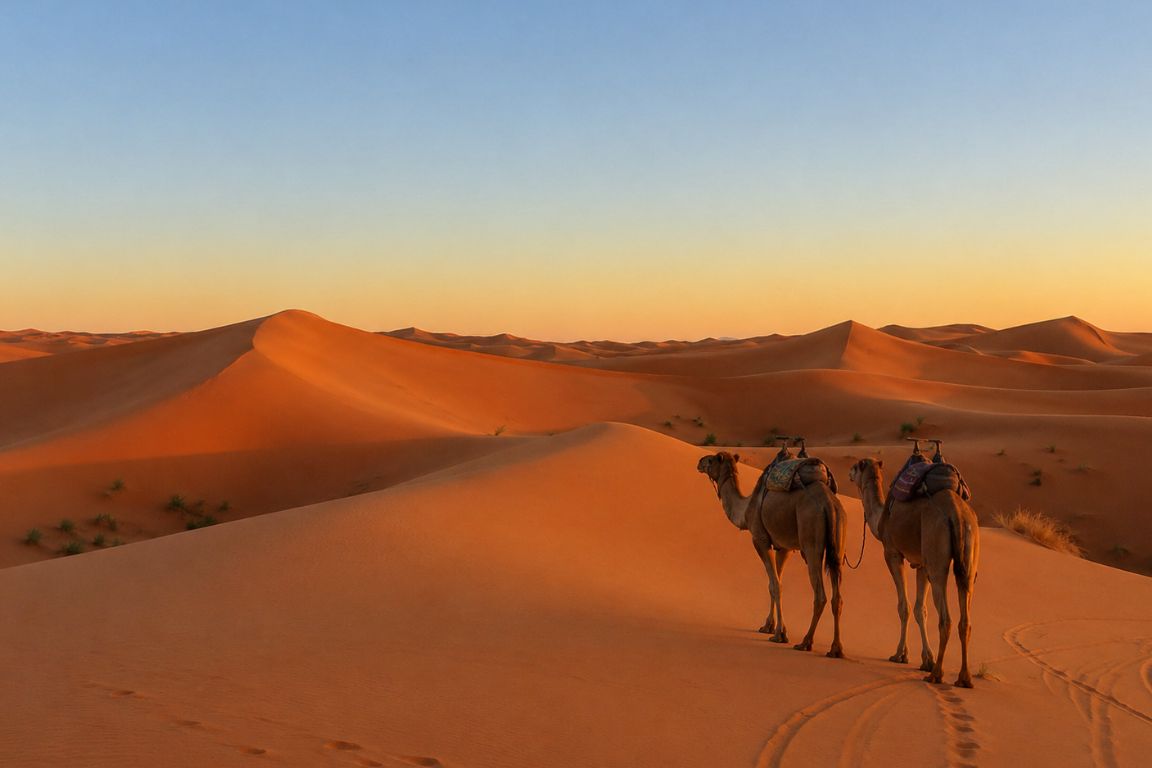 The best time to visit the Sahara Desert from Marrakech is October through April. Within that window, October and November stand out as the single best months for most travelers – the heat has broken, the dunes glow warmer in the lower autumn light, crowds are thinner than spring, and the night sky between October and April reaches a clarity that photographers travel specifically for. Spring (March to May) is equally good on temperature but carries a higher risk of sandstorms.
The Sahara operates on two practical zones: the months you want to go, and the months you genuinely should not. June, July, and August fall firmly in the second category. Daytime temperatures in Erg Chebbi regularly exceed 45°C during summer, the sand surface can reach 60°C underfoot, and camel rides become dangerous to both animal and rider in the midday hours. Some camps close outright for July and August. This is not a question of preference, it is a matter of basic comfort and safety.
Everything from October to April is workable, each month with its own character. The honest version: if you can travel in October or November, do. If school schedules or work force you into December or February, that’s still a good trip. March and April are beautiful. The worst realistic option in the viable window is late May, when the heat is already climbing toward uncomfortable territory. But even then, the early mornings and evenings hold.
The desert at Erg Chebbi produces over 300 clear nights per year, which means whatever month you visit in the October-April window, your night in the dunes is almost certainly going to deliver stars you weren’t prepared for. That consistency is one of Morocco’s genuine advantages over many other desert destinations. We’ve guided travelers in every month of the year since 2008. The ones who leave most satisfied, most consistently, are the ones who visited in October, November, and March.
We’ve put together a full planning breakdown in our how to visit the Sahara Desert from Marrakech desert tours guide so you know exactly what to book, what to pack, and what to expect on the road.
What Is The Sahara Desert Like In Spring (March To May)?
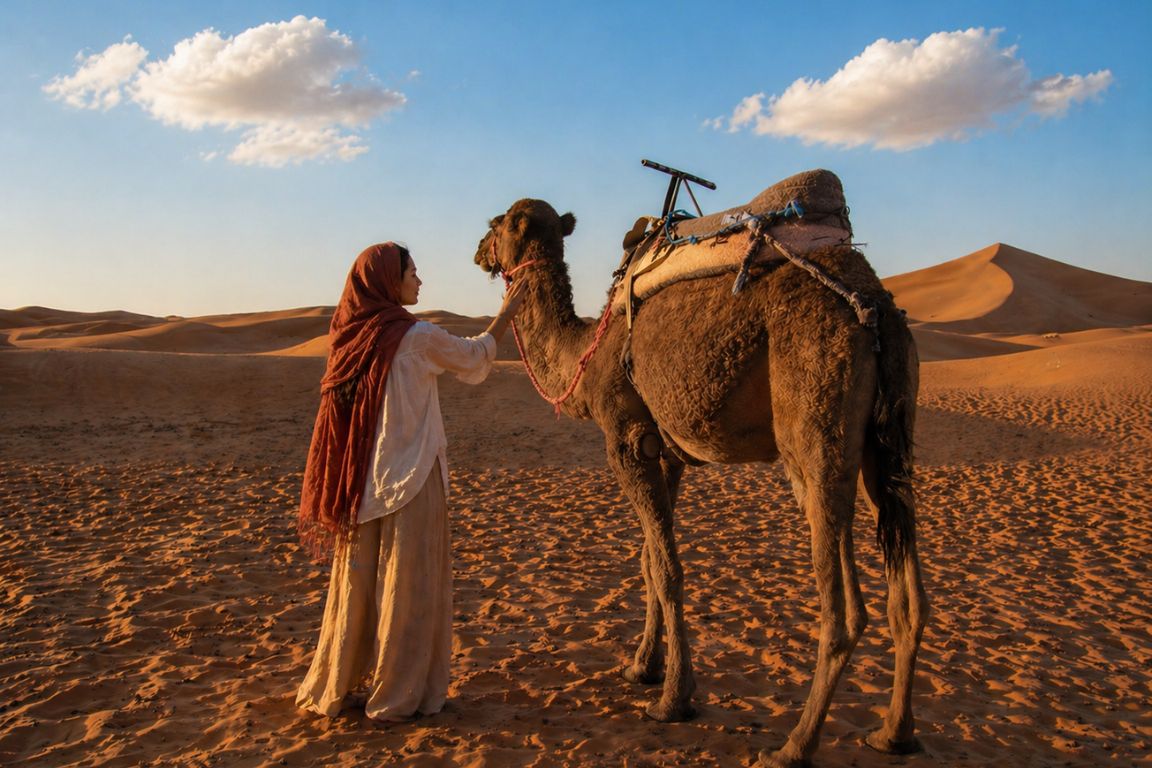 Spring is one of the two best seasons for a Sahara trip from Marrakech. Daytime temperatures range from 22°C in March to around 35°C by late May, nights stay cool and comfortable, and the desert landscape briefly shows color – scattered wildflowers, active desert wildlife, and the reddest dune light of the year. The one honest risk is sandstorms, most common in March and April.
March is when the desert wakes up. The cold that made December nights brutal has lifted, daytime warmth is back, and the dunes are at their most photogenic – the light sits lower on the horizon during shoulder-season months, which carves shadows across the sand in ways that high-summer overhead sun simply cannot replicate. Photographers who know Morocco book March and October for this reason.
The sandstorm risk is real and worth understanding. Spring is the peak period for Morocco’s famous Chergui wind – a hot, dry southeasterly that sweeps across the Sahara, lifts sand, and can reduce visibility to near-zero in severe cases. Morocco’s General Directorate of Meteorology has issued orange-level alerts for events with gusts between 70 and 80 km/h. This sounds alarming, but context matters: sandstorms in the dunes are not dangerous when you’re with an experienced guide who knows where to shelter. They can be dramatic, even extraordinary – something you couldn’t have planned and wouldn’t forget. Pack a large scarf regardless of season, and your guide will know what to do if conditions shift.
We’ve put together a full packing breakdown in our what to wear in Marrakech desert tours guide so you know exactly what to bring, what to leave behind, and what to buy in Marrakech before you head out.
May deserves a separate note. Early May is excellent: temperatures are warm but not punishing, crowds from Easter holiday season have thinned, and the nights are still genuinely cool. Late May is different. By the third week of May, daytime desert temperatures approach 35°C, afternoons become uncomfortable, and the camel rides are increasingly limited to early morning and after 5 pm. If you’re visiting in May, plan to arrive at the dunes no later than the first two weeks.
Spring tours fill up faster than any other season – especially the Easter window and the last two weeks of April. If your dates fall in this range, check the 3-day Sahara tour to Merzouga and Erg Chebbi at least 3-4 weeks ahead to secure the right camp and vehicle.
What Is The Sahara Desert Like In Autumn (September To November)?
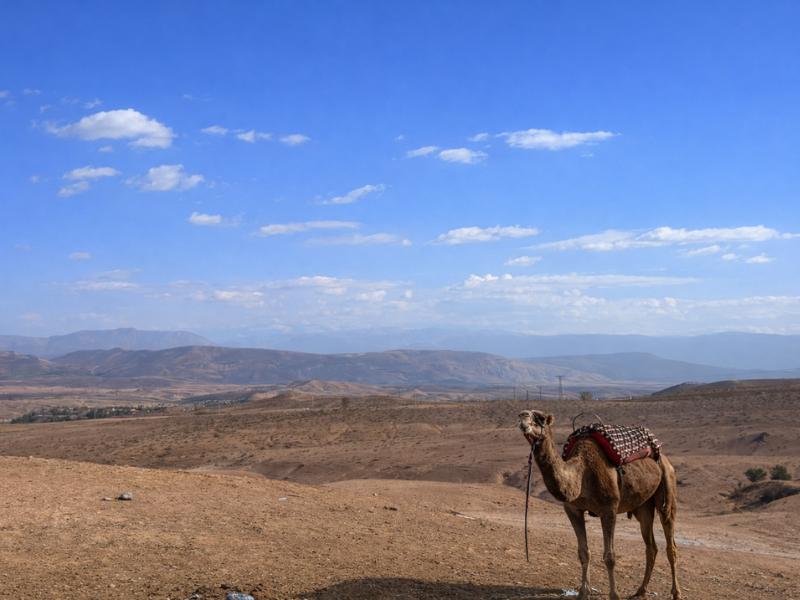
Autumn is the single best season to visit the Sahara Desert from Marrakech for most travelers. September still carries residual summer heat but is manageable by late in the month. October is widely regarded as the gold standard desert month – warm days around 28-30°C, cool nights around 15°C, exceptional atmospheric clarity, and the best sunset light of the year. November cools further, crowds thin, and the stargazing peaks.
October in the Sahara has a quality that’s hard to describe until you’ve been there. The summer dust has settled. The air is dry and clear in a way that changes how the dunes look – sharper shadows, deeper colors, that particular amber that shows up in every photograph taken in this month and looks like it was filtered. It wasn’t. That’s just October in the Moroccan desert.
November is underrated. Most travelers gravitate toward October as the marquee autumn month, and it is excellent, but November has qualities that October doesn’t. Temperatures are a touch cooler (daytime around 24-25°C, nights dropping to 10°C or below by late in the month), the crowds are lighter, and the nights from mid-November onward are some of the clearest of the year. Orion becomes visible by November, rising early and staying high through the night – the kind of constellation that stops conversation when it clears a dune ridge in the east.
September is the shoulder between summer and autumn. Early September in the desert still carries heat from August, with daytime temperatures around 35°C and afternoons that are best spent inside or by a camp pool. By late September, the shift is real and noticeable. If September is your only option, aim for the last two weeks and confirm with your operator that the camp you’re booking is open and fully staffed – some operators run reduced services through early September.
What Is The Sahara Desert Like In Winter (December To February)?
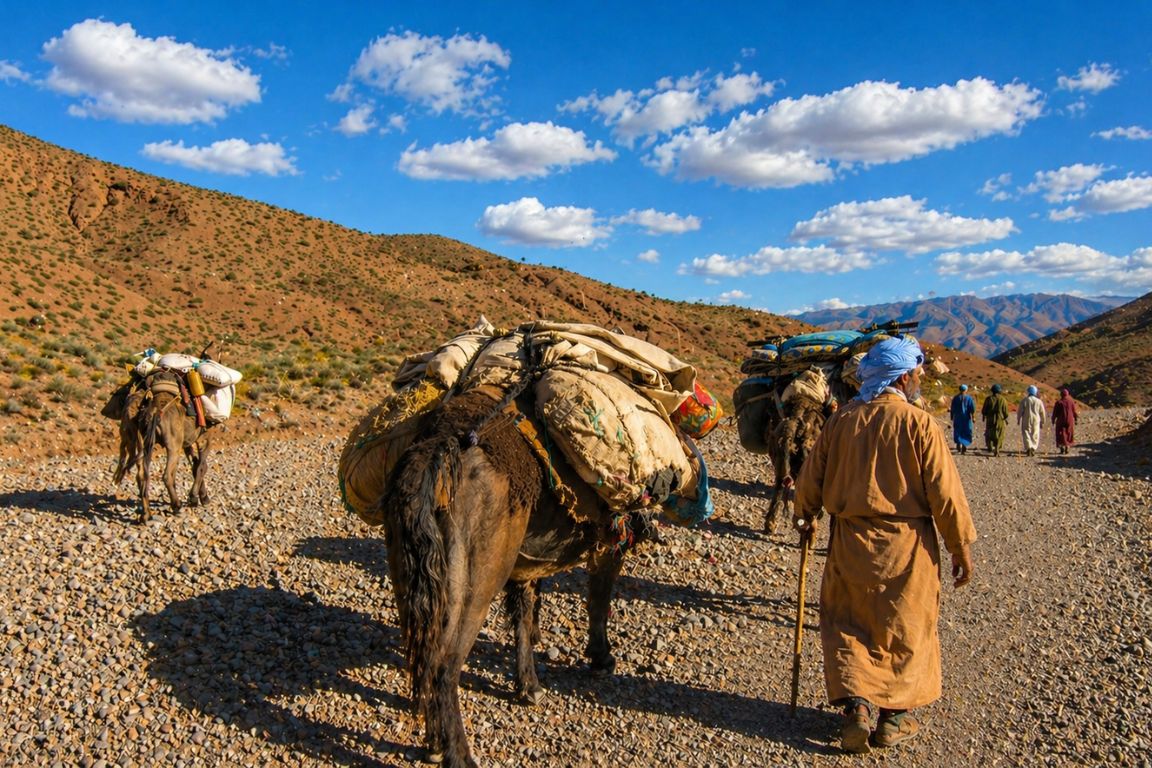 Winter in the Sahara is quieter, cheaper, and more dramatic than most travelers expect. Daytime temperatures are mild and pleasant – around 18-24°C, but nights drop sharply, often reaching near-freezing by January and sometimes below zero at the coldest point before dawn. The winter desert is profoundly still. The colors of the dunes change in low winter light, nomadic communities are more active moving through the region, and the stargazing between December and February is at its sharpest.
The cold is the thing people don’t prepare for. It’s not the cold of an overcast autumn day in northern Europe, it’s desert cold, which arrives fast after sunset and has a clarity to it that feels different. By 10 pm in January, someone who came in a light jacket is searching for blankets. The camps know this; good ones have electric blankets, proper duvets, and heating in the communal tents. But budget camps often don’t, and travelers who booked without asking about heating facilities in winter are the source of some of the most consistent complaints we see across TripAdvisor reviews.
The payoff is real. A winter desert day – clear, warm in the afternoon sun, completely silent – is one of the most peaceful environments on earth. The Geminid meteor shower in December and the Quadrantids in January are extraordinary from Erg Chebbi, where Bortle Class 1-2 skies mean you’re seeing the sky as it looked before electric light existed. Nomadic Berber families, who migrate seasonally, are often camped within sight of the main dunes in winter – an experience that simply doesn’t happen in peak tourist months when the desert feels more like a destination than a home.
December around Christmas and New Year is the exception to the “quiet winter” rule. It’s a peak booking period for European travelers, camps fill up, prices rise, and the dunes are noticeably busy on December 25-31. Book well ahead if your dates include this window, or shift your visit to the second week of January when conditions are similar but the crowds have completely vanished.
Should You Visit The Sahara Desert In Summer (June To August)?
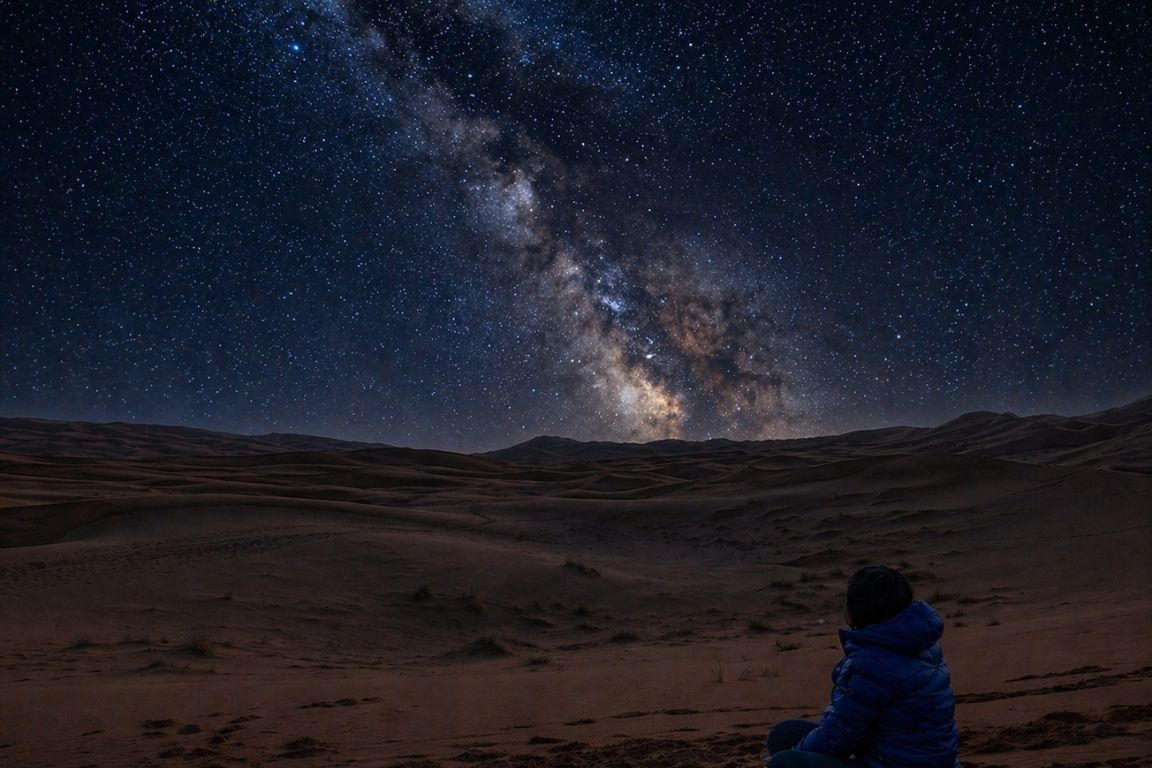 Summer in the Sahara is genuinely extreme. Daytime temperatures in the dunes regularly hit 45°C and the sand surface can reach 60°C – hot enough to burn exposed skin on contact. Camel rides are unsafe in the midday hours, some camps close for July and August entirely, and the experience of being in the desert is reduced to very early morning and late evening activity only. Most experienced guides and tour operators recommend against it for most travelers.
That said, summer has its people. Some travelers have a genuine tolerance for heat and come specifically for the intensity – the completely empty dunes at 6 am, the surreal quiet of a desert where most tourists have stayed away, the low-season pricing that can cut tour costs by 20-30%. The summer Milky Way, when the galactic core rises after 10 pm, is the most vivid of the year. If heat is manageable for you and you’ll stick to dawn and dusk activity windows, a summer Sahara trip can be remarkable in its own way.
For everyone else – families, anyone with health considerations, first-timers – the honest advice is to wait. The desert in October feels like the world was designed for human beings to exist in. The desert in July feels like the world is trying to cook you. Both are true desert experiences, but only one is recommended without caveats.
What Month Has The Best Weather For A Sahara Desert Tour?
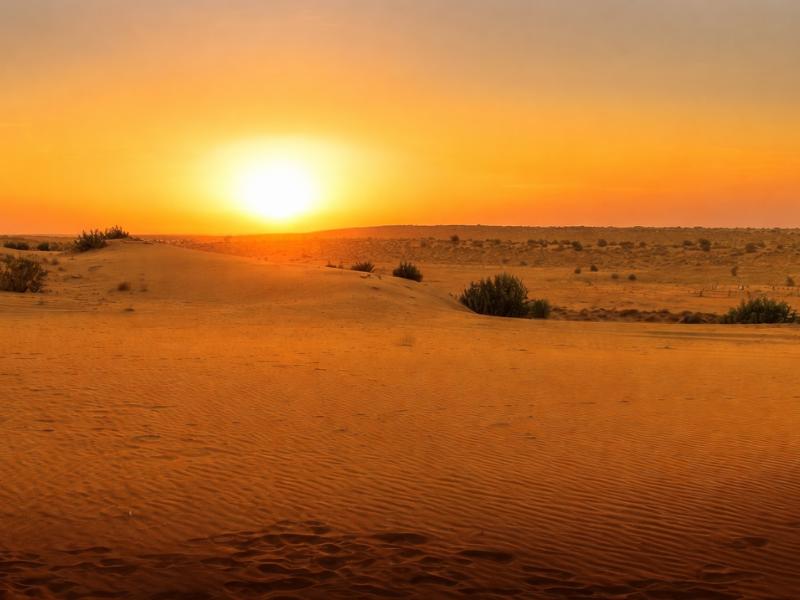
October is the single best month for a Sahara desert tour from Marrakech. Daytime temperatures sit around 28-30°C – warm but not punishing. Nights cool to around 15°C. The atmospheric clarity reaches its autumn peak. Sunset light on the dunes at Erg Chebbi in October is the color and quality that fills travel magazines. November is a close second, with even thinner crowds and exceptional stargazing.
Here’s how the top months compare across what actually matters for a desert trip:
| October | 28-30°C | 15°C | Moderate | Exceptional | Excellent |
| November | 24-25°C | 10°C | Light | Excellent | Peak |
| March | 25-28°C | 10°C | Moderate | Excellent | Very good |
| April | 27-32°C | 15°C | Busy | Very good | Good |
| December | 20-22°C | 5°C | Light-Busy (Christmas) | Good | Peak |
| February | 20-22°C | 7°C | Very light | Good | Excellent |
Temperatures verified April 2026 – Merzouga/Erg Chebbi climate data
The ranking holds whether you’re prioritizing photography, camel rides, stargazing, or camp comfort. October and November deliver across all categories. If your travel dates are fixed and don’t fall in those two months, March and April come very close. February is an underrated month – practically empty, beautiful light, and the nights are cold in the way that makes a fire and a blanket feel like the best things in the world.
How Does The Season Affect What You Can Do In The Sahara?
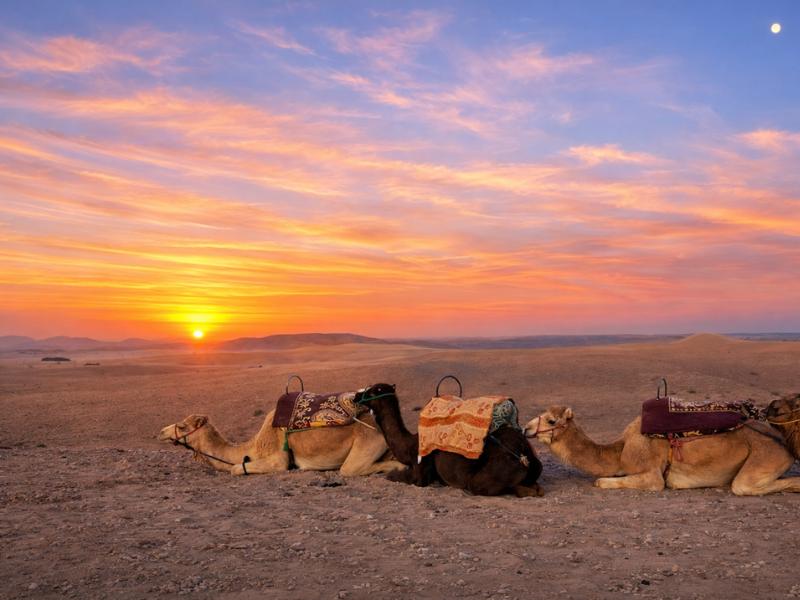
Season determines more than just temperature in the Sahara. It affects which activities are possible and when during the day, how long camel rides can last, whether sandboarding is comfortable, the quality of stargazing, and whether nomadic communities are present in the dunes. Spring and autumn are the most activity-flexible seasons. Winter restricts some daytime activity but opens extraordinary experiences. Summer limits almost everything to two windows of the day.
Camel trekking is the activity most directly shaped by season. In October through April, a two-hour sunset camel ride is comfortable, manageable, and the standard format. In May and September, operators often shift the ride earlier in the afternoon. In summer, responsible operators don’t do long camel rides during the day at all – the animals overheat and the experience becomes unpleasant for everyone. Dawn rides in summer, before 8 am, are the exception; the dunes are extraordinary in the early light when nobody else is there.
Sandboarding follows the same logic. Cool, firm sand in autumn and winter is faster and more controllable. Hot summer sand is softer and harder to manage going downhill. Photography is most rewarding in October, November, and March when the sun’s angle creates the long lateral shadows that give dune photographs their depth. Summer overhead sun flattens the landscape.
Stargazing peaks in winter. The cooler, drier air between December and February reduces atmospheric moisture to almost nothing, and the Bortle Class 1-2 skies above Erg Chebbi become extraordinary – the Geminids in December and the Quadrantids in January are among the year’s best meteor showers, visible without any equipment. The Milky Way’s galactic core is best in summer (June to August) for those who want that specific view and can handle the heat. For a first-time desert night that delivers genuine wonder, winter delivers more than any other season.
First time planning a Morocco desert trip and not sure how to fit it around everything else you want to see? Here’s our how many days do you need for Marrakech desert tours guide so you build the itinerary right.
Month-By-Month Guide To The Sahara Desert From Marrakech
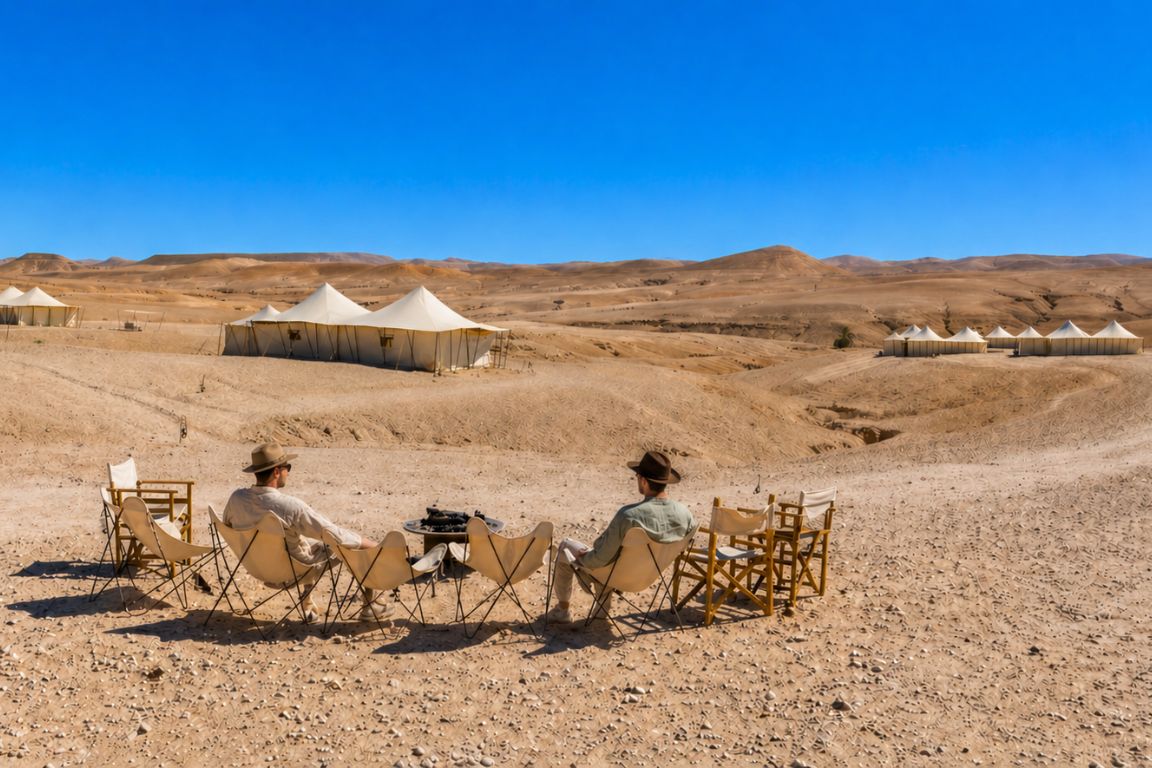 Every month in the Moroccan desert has its own character. Here’s what to realistically expect, and who each month suits best.
January sits at the cold end of the winter range. Daytime temperatures hover around 18-20°C – pleasant and sunny in the afternoon, but nights regularly drop to 2-5°C and can touch zero before dawn. The desert is quiet and the dunes are often untouched by other travelers. January is excellent for anyone who wants the camp largely to themselves, extraordinary night skies, and a desert that feels like a secret. Pack thermal layers, a proper fleece, and gloves for the early morning camel ride.
February is one of the most underrated desert months in Morocco. The winter cold is easing slightly, with nights around 7°C and days around 20-22°C. Crowds are at their lowest outside summer. A rare desert rain can fall in February – brief and unusual, but when it does, the sand changes color and the nomads who live in the region treat it as a small celebration. If you want the Sahara almost entirely to yourself at comfortable temperatures, February is the answer.
March is the start of the prime season. Days warm to 25-28°C, nights stay cool at around 10°C, and the dunes are at their most photogenic in the rising spring light. Wildflowers appear briefly in the valleys on the drive south. The main caveat is spring sandstorms – most common in March, driven by the Chergui wind as the desert surface heats rapidly. They’re sporadic, not guaranteed, and your guide will know how to read the conditions.
April is busy, it’s Easter and spring holiday season across Europe, which fills the camps and pushes prices up. The temperatures are ideal: 27-32°C days, 15°C nights. The light is excellent for photography. Sandstorms are still possible. April is a genuinely great month to go, but book well ahead. Early April has better availability than late April.
May operates in two halves. The first two weeks are excellent: warm but not extreme, the Sahara’s peak crowds have thinned after Easter, and conditions for camel rides are still comfortable all afternoon. The last two weeks of May see daytime temperatures climbing toward 35°C, afternoons becoming hot, and the experience beginning to shift toward the summer pattern of early morning and evening activity only.
June is when summer begins in the desert and the shift is stark. Daytime highs hit 40°C. Midday is genuinely dangerous for extended outdoor activity. Camp facilities become critical – shade, air conditioning in common areas, cold water storage. Some operators reduce services. Stargazing peaks at this time of year (the Milky Way galactic core is spectacular in June), but you access it after tolerating a brutal afternoon. For heat-tolerant travelers specifically, early June before temperatures peak can work.
July is the most extreme month in the Moroccan desert. The average daytime high at Erg Chebbi exceeds 45°C. The sand surface reaches 60°C. Some camps close entirely. Camel rides are restricted to the hour before sunrise. If you’re in Morocco in July and want a desert experience, the Agafay Desert 40 minutes from Marrakech is a far more reasonable alternative.
August matches July in intensity and is almost identical in its limitations. Nights offer slightly less relief than June, with lows still around 27-30°C. Unless you’re a serious photographer chasing summer Milky Way imagery and can organize your trip entirely around the 5 am and 9 pm windows, August in the Sahara is not recommended for most travelers.
September splits the difference. Early September is still summer – hot, demanding, with limited afternoon activity. By late September, the shift is measurable: daytime temperatures fall toward 30-32°C, nights cool to around 18°C, and the feeling of summer lifting from the dunes is palpable. The last week of September is sometimes genuinely excellent. Watch the forecasts and if late September aligns with your travel dates, it can surprise you.
October is the best month. Daytime temperatures around 28-30°C, nights around 15°C, exceptional atmospheric clarity, the best sunset light of the year, and the Sahara at its most visually extraordinary. October is also when the October Orionid meteor shower peaks. Camps are open, fully staffed, and running at their best. This is the month we recommend most consistently across our 9,100+ travelers guided since 2008.
November is October’s quieter sibling. Temperatures cool further: days around 24-25°C, nights dropping toward 10°C by late November. Crowds are significantly lighter than October. The stargazing from mid-November onward is exceptional – Orion rises early, the Leonid meteor shower peaks on November 17-18, and the desert sky reaches the kind of clarity that makes first-time night-sky photographers go completely quiet. November is arguably the best month for anyone specifically chasing the desert night experience.
December is divided by the Christmas period. Early and late December are quiet, cold, and beautiful – daytime highs around 20°C, nights touching near-freezing, and a desert that belongs almost entirely to you and whatever small group shares your camp. Christmas week (December 22-31) is the exception: it’s one of the busiest booking periods of the year, prices rise, and good camps sell out weeks ahead. If December is your month, either go before the 20th or in the first week of January.
Whatever month you're planning for, the 3-day Sahara tour to Merzouga and Erg Chebbi is the listing to check for dates and camp type. Seasonal notes and departure dates for the Erg Chebbi route sit on the 3-day Sahara tour to Merzouga and Erg Chebbi.
Desert camps in Morocco vary wildly between budget and luxury – our Marrakech desert camp experience in Morocco guide breaks down what each level actually delivers and whether the premium is worth it.
What Our Travelers Tell Us About Seasonal Desert Visits
After 9,100 travelers guided since 2008 across every season, the patterns are clear. Data below reflects our 2024 client groups.
| Travelers who visited Oct-Nov and rated experience “exceeded expectations” | 94% |
| Most common winter complaint | 62% said they were not prepared for how cold the nights were |
| Spring travelers who experienced a sandstorm during their trip | 25% – of whom 78% described it as a highlight rather than a problem |
| Travelers who said October was their single favorite travel month of the year | 45% |
| Summer travelers (June-Aug) who said they’d return in a cooler month | 88% |
Frequently Asked Questions
What is the best month to visit the Sahara Desert in Morocco?
October is the single best month. Daytime temperatures sit around 28-30°C, nights cool to 15°C, atmospheric clarity peaks, and the sunset light on the dunes is exceptional. November is a close second with thinner crowds and outstanding stargazing.
Is Morocco’s Sahara Desert cold in winter?
Yes, genuinely cold, especially at night. December through February nights regularly drop to near-freezing, and January nights can touch 0°C before dawn. Days remain pleasant and sunny (18-22°C), but anyone planning a winter trip needs proper warm layers including thermals, fleece, and a jacket for the camel ride at sunrise.
What are the sandstorm risks in the Sahara?
Sandstorms are most common in spring, particularly March and April, driven by the Chergui wind – a hot, dry southeasterly from the Sahara that can reduce visibility significantly. They’re sporadic rather than predictable, and an experienced guide will know how to read conditions and find shelter. A large scarf worn around the face provides the most practical protection.
Can you visit the Sahara in summer?
You can, but it’s not recommended for most travelers. Daytime temperatures regularly exceed 45°C. Some camps close in July and August. Activity is restricted to the hour before sunrise and after sunset. If you go in summer, prioritize a camp with shade, air conditioning in common areas, and cold water storage. For most visitors, a cooler month will deliver a significantly better experience.
Is April a good time to visit the Sahara from Marrakech?
April is an excellent time for weather – ideal temperatures of 27-32°C during the day and cool nights around 15°C. The tradeoff is crowds: April falls in European spring holiday season, so camps are busy and prices are higher. Book 3-4 weeks ahead for April departures, particularly around Easter.
When is stargazing best in the Sahara Desert?
The clearest skies for stargazing are October through April, when dry winter air reduces atmospheric moisture. November through February is the peak window for pure sky clarity and meteor showers – the Geminids in December and Quadrantids in January are spectacular from Erg Chebbi. For Milky Way photography specifically, June to August offers the most visible galactic core, though summer heat is the tradeoff.
Not sure which month works for your schedule? Match your dates to the 3-day Sahara tour to Merzouga and Erg Chebbi.
Written by Yasmin Carter
Moroccan tour guide since 2008 · Founder, Marrakech Desert Tours
Yasmin has guided over 9,100 travelers through the Sahara, Atlas Mountains, and Moroccan desert routes since founding the agency.
Choose Your Marrakech Desert Trip
Have your travel dates in mind? Check this two-night Merzouga itinerary before arranging separate hotels and transport.
Compare Routes And Tailor Your Choice
General guidance until you choose. English is offered on these routes. All return to Marrakech; confirm the exact meeting point and option before payment.
Three days: Shared minibus, one Tinghir hotel night and one Erg Chebbi camp night. Outside camp toilets.
Four days, two desert nights: Shared standard or deluxe camp; Upgrade to Private supplies a private vehicle. Day four is a long return.
Four days, split return: Private transport, one camp night and two hotel nights. Private bathrooms; less time at the dunes.
One evening: Six-hour Agafay sunset, dinner and bonfire. Returns the same night; not the Sahara.
Four Days, Two Desert Nights
Two nights in Merzouga, camel rides, sandboarding and a nomad visit; choose Deluxe Camp for a private bathroom.
Shared vehicle unless Upgrade to Private is selected. Long return drive on day four. Drinks and tips extra.
Check Dates: Four Days, Two Desert Nights