Marrakech Desert Camp Experience In Morocco
What is a Sahara desert camp experience like? Discover what to expect, differences between camp types, and why this night is unforgettable.
Choose the route and camp option together: three days, two desert nights, private transport and private bathrooms are different booking choices.
Booking Choice: Two nights in Merzouga, camel rides, sandboarding and a nomad visit; choose Deluxe Camp for a private bathroom. Explore Four Days, Two Desert Nights
| Arrival | Mint tea welcome, bags carried to tent, sunset camel ride into the dunes |
| Tent | Canvas or traditional Berber structure – basic to luxury, single or ensuite |
| Dinner | Multi-course Moroccan spread – harira, salads, tagine, couscous, bread, dessert, mint tea |
| Evening | Campfire, Berber drumming and singing, stargazing, total silence beyond the camp |
| Night | Cold sets in fast after midnight – warm bedding essential Oct-March |
| Morning | Sunrise camel ride, breakfast at camp, sandboarding, departure |
| Activities | Sandboarding, fossil hunting, 4×4 excursions, nomad family visits, dune walks |
| Signal / WiFi | Limited or none – this is part of the experience |
Information verified April 2026
What Is A Marrakech Desert Camp Experience Actually Like?
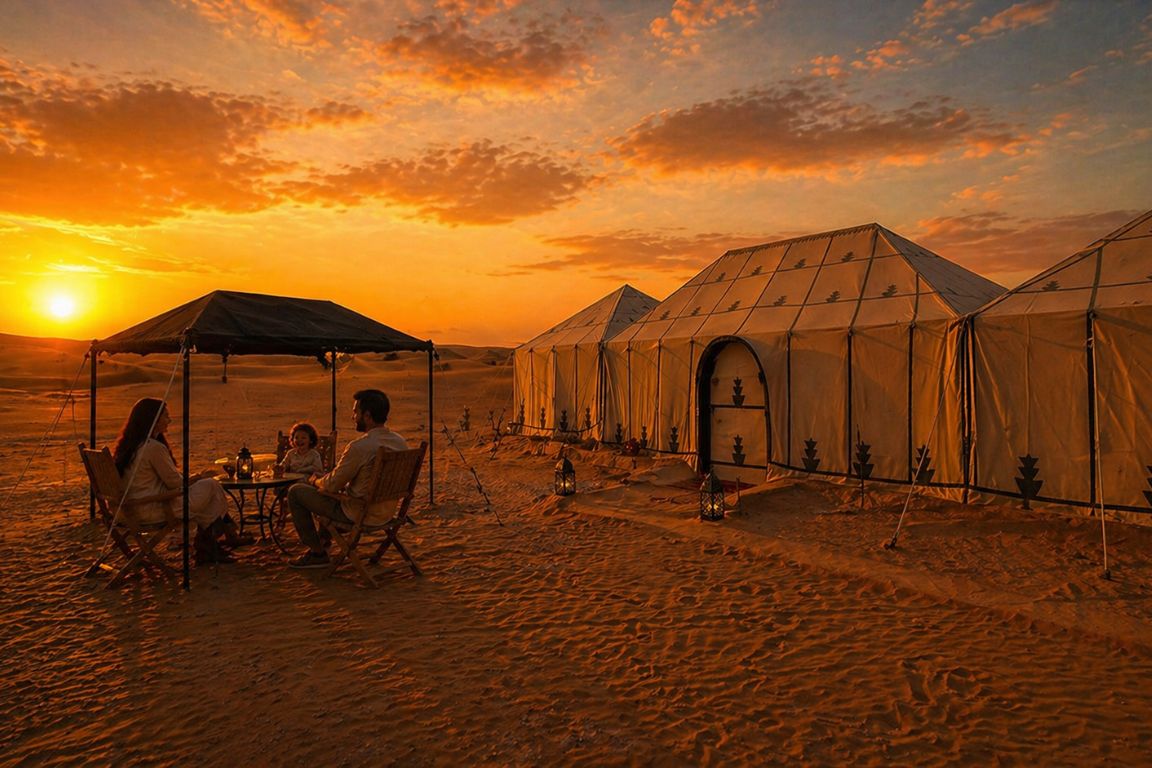 A Marrakech desert camp experience is a night – sometimes two – spent inside the Sahara dunes at Erg Chebbi or Erg Chigaga, in a tent ranging from traditional Berber canvas to full luxury glamping. You arrive by camel as the sun goes down, eat dinner by firelight, listen to Berber drums under more stars than you’ve ever seen, sleep in the desert cold, and wake for a sunrise that most travelers describe as the best of their lives. It is not a comfortable experience in the resort sense. It is unforgettable in the way that almost nothing else is.
The detail that surprises people most is the silence. Cities are never quiet – not fully. Even rural places have birds, traffic, wind in trees. The desert at night is a different category of quiet. Sound carries in unusual ways across sand – a camel groan from somewhere out in the dark, the distant percussion of another camp’s musicians, but beyond those occasional threads, there is simply nothing. This silence lands differently on different travelers. Some find it deeply peaceful. Some find it briefly unsettling. Almost everyone ends up lying outside their tent or sitting on the dune above camp at some point in the night, unable to sleep, not wanting to.
We’ve guided over 9,100 travelers through this experience since 2008. The desert camp night is consistently the part of a Morocco trip that people describe most vividly when they come home. Not the medinas, not the Atlas crossing, not even the camel ride. The night in the desert itself. The dinner. The music. The stars. The cold that woke them at 4 am and turned out to be the moment they walked outside and saw what the sky looks like without electricity for 200 km in any direction.
None of this requires a luxury camp to be real. The stars are the same above every tent. The fire burns the same at every price point. The drumming by Berber staff is neither better nor worse based on what you paid per night. What the price buys is comfort – private bathrooms, proper beds, reliable hot water, heating in winter, and comfort matters, especially on a cold December night or when you have children with you. But the experience itself is available in every version of the desert camp, and travelers who arrive with honest expectations at a simple camp often leave as transformed as those who paid five times more.
Wondering which desert camps welcome children and which tours are realistically manageable with young kids in tow? This can kids do Marrakech desert tours guide covers what family travel blogs rarely address honestly.
What Happens When You Arrive At A Desert Camp In Morocco?
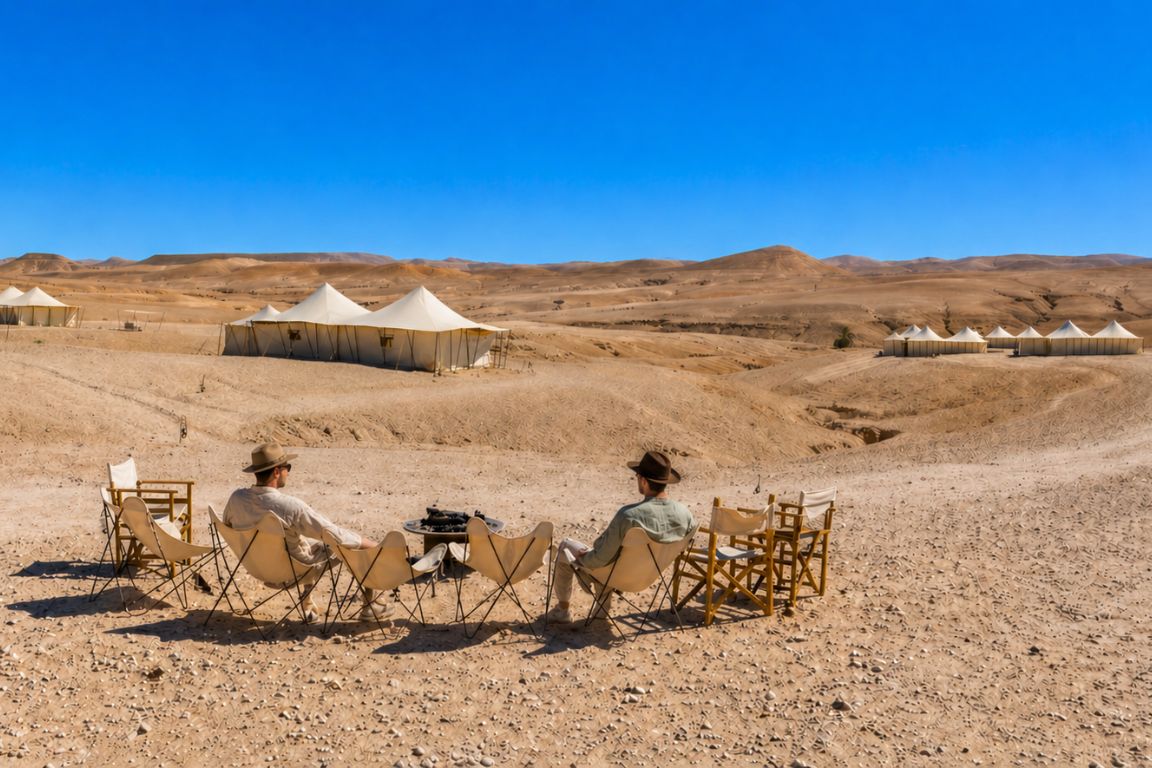 Arrival at a Sahara desert camp typically happens in late afternoon, timed to allow the camel ride in before dark. Your vehicle stops at the dune edge, bags are transferred to 4×4 or camel, and the ride to the camp takes 30 to 90 minutes depending on position. You arrive to a welcome of mint tea and sweet cakes served by camp staff. Then comes the tent, the first look at the surroundings, and whatever time remains before sunset.
The arrival is orchestrated, but not artificially so. Camp operators have been timing this for years: the camel ride calibrated so you crest the final dune ridge as the sun is dropping, the colors at their most saturated. The first view of Erg Chebbi‘s dunes from camel height – not from a viewpoint or through a car window but from within them, moving slowly through them as the light turns orange – is what people mean when they say the trip changed something.
The mint tea ceremony is the first real moment of Berber hospitality. It’s not theater. Moroccan hospitality is deep and genuine – welcoming a guest properly is a cultural value, not a performance. The tea will be sweet and strong, served in small glasses from a height to create a froth. The cakes will be date-filled or sesame-coated and made at the camp or in the nearest village that morning. You sit on cushions outside the main tent, drink tea, listen to the silence, and feel 9 hours of driving leave your body.
After tea, staff show you to your tent and explain the evening’s schedule when dinner will be served, when the music starts, what time the sunrise ride departs. The tent itself, depending on camp tier, ranges from a traditional Berber canvas structure layered with rugs and lanterns to a full canvas hotel room with a proper bed, side tables, electricity from solar panels, and an ensuite bathroom. Both are genuinely good. The difference is comfort, not magic.
The hour before dinner is when most travelers go exploring – walking up the nearest dune, watching the light on the sand change from gold to rose to grey, sitting in the silence and simply being in a place that is genuinely different from anywhere they’ve ever been. Camp arrivals on the 3-day Sahara tour to Merzouga and Erg Chebbi are timed to protect this hour. It’s too important to rush.
We’ve put together a full planning breakdown in our how to visit the Sahara Desert from Marrakech desert tours guide so you know exactly what to book, what to pack, and what to expect on the road.
What Do You Eat At A Sahara Desert Camp?
Desert camp meals are full multi-course Moroccan spreads, almost always including harira soup, a selection of cold salads, a slow-cooked tagine as the main course, freshly baked bread, fruit, and sweet Moroccan pastries for dessert. Mint tea flows throughout. The food is cooked on site from ingredients sourced in the nearest village, and it is consistently one of the most talked-about parts of the camp experience – better than most travelers expect given the location.
Dinner is communal at most camps. Tables are set either in the dining tent or outside under the open sky, lanterns casting uneven light on the food and the people eating it. The meal begins with harira – Morocco’s warming tomato, lentil, and chickpea soup spiced with cumin, coriander, and fresh herbs. Alongside it come salads: zaalouk (roasted aubergine with tomato), taktouka (roasted peppers and tomatoes), carrot with chermoula, perhaps a plate of local olives. These aren’t starters to be rushed. They are part of the meal, and you use the bread – khobz, baked in the camp oven or brought from the village that day – to scoop everything up.
The tagine arrives in its clay conical pot, still steaming. At desert camps the most common versions are chicken with preserved lemon and olives, lamb with prunes and almonds, or a Berber vegetable tagine for those who requested it. The slow cook gives the meat a tenderness that’s difficult to achieve any other way, and the spicing – saffron, ras el hanout, ginger, cinnamon – carries the flavors of a culinary tradition that’s been in these valleys for centuries. In some camps, the tagine is cooked directly in the embers of the campfire. The flavor difference is real.
After the tagine comes fruit – seasonal, local, served simply. Then kaab el ghazal (crescent-shaped almond pastries) or chebakia (honey-coated sesame pastry), and another round of mint tea poured from height. Some luxury camps expand this further – four-course menus, champagne on request, private dining in the dunes with lanterns arranged around the table. But even the most basic camp produces a dinner that travelers consistently describe as extraordinary, partly because of the food itself and partly because of where they’re eating it.
Vegetarian and vegan travelers are easily accommodated with advance notice. The Berber vegetable tagine is genuinely excellent and not a lesser option – it was the original form of the dish before meat became the dominant version. Inform your operator when booking and the camp will prepare accordingly. Dietary allergies and specific intolerances should also be communicated in advance; quality camps handle these without difficulty.
What Activities Are Available At A Desert Camp In Morocco?
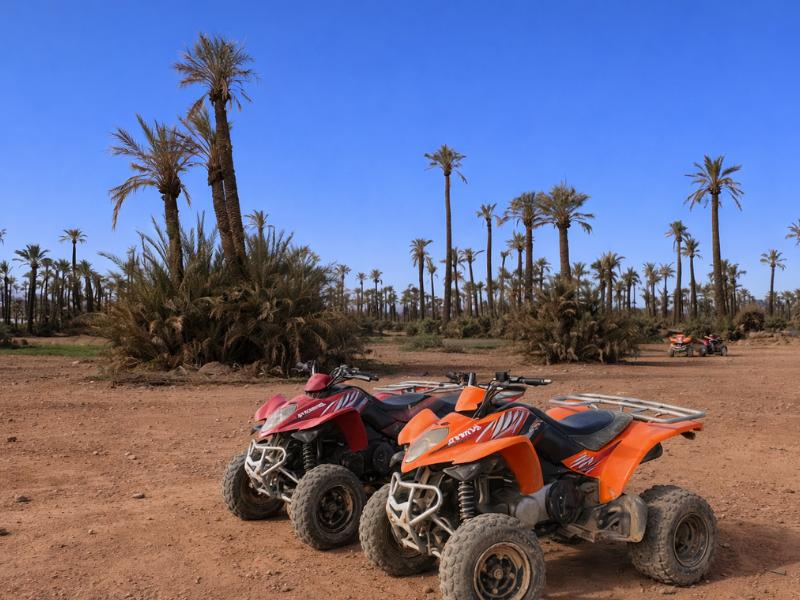
The primary activities at a Moroccan desert camp are sandboarding, camel trekking, 4×4 desert excursions, fossil hunting, dune walking and climbing, nomadic Berber family visits, and stargazing. Some camps add quad biking and buggy excursions. None of these are mandatory – the desert also rewards travelers who do nothing more than sit on a dune and watch the light move across the sand all morning.
Sandboarding is the activity most travelers underestimate before doing it. A proper Erg Chebbi dune gives 50 to 150 metres of sand at a consistent angle – fast, smooth, and completely safe when the guide picks the right slope. Lying on the board for the first run and then standing for subsequent ones is the standard progression, and most people are properly surfing within a few runs. The work is the climb back up. Bring water. The descent takes seconds; the ascent takes ten minutes of deep-sand effort that leaves calves burning.
Fossil hunting near Erfoud, on the route to the dunes, is available as part of most multi-day itineraries and is one of the least-discussed but most genuinely surprising experiences on the tour. The Sahara was once a shallow tropical sea, and the desert floor around Erfoud and Alnif is scattered with trilobites, ammonites, and nautiloids from 350 to 500 million years ago. Guides know where to look, and travelers keep what they find. It’s the kind of hands-on natural history that no museum replicates.
Nomadic Berber family visits, available at camps where the staff’s extended families live nearby, are quiet, dignified, and meaningful. A guide introduces you to families who live in the desert year-round – their tent architecture, the way they move seasonally with the animals, the rhythm of daily life in a landscape most travelers have only experienced as a tourist backdrop. These visits are not performances. They’re invitations, and they require the same respect you’d show in any private home.
4×4 excursions deeper into the dunes allow travelers to reach areas of the erg that are inaccessible on foot or camel. Some camps offer a drive to viewpoints where you can see Algeria on the horizon – the border is close enough to be visible on a clear day – or to fossil-rich plateaus that few groups reach. Quad biking and buggy excursions are available as paid extras at most Erg Chebbi camps. They’re exhilarating and popular, though they introduce noise and petrol smell into what is otherwise a pristinely quiet environment; some travelers find this disruptive to the desert atmosphere they came for.
What Is It Like To Sleep In A Desert Camp Tent?
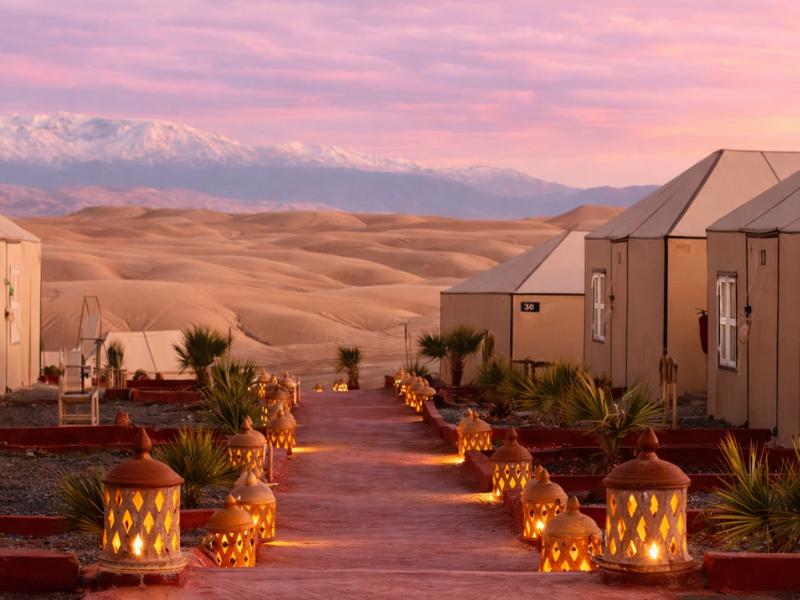
Desert camp tents range from traditional Berber canvas structures layered with rugs and lanterns to full luxury canvas hotel rooms with king beds, private bathrooms, solar electricity, and heating. In every version the experience is specific to the desert: cold after midnight from October through March, sand that finds its way into everything, and a silence outside the tent walls that is genuinely unlike any other sleeping environment.
The Berber-style traditional tent at the simpler end is a low, wide canvas structure held by poles and stabilized by guy ropes, its floor entirely covered with layered rugs in reds and oranges. The sleeping arrangement is a mattress on the rug floor with heavy wool blankets – the same blankets that Berber families use and that manage the desert cold with a weight and density that synthetic sleeping bags rarely match. Lanterns provide the only light. There are no sockets, no phone signal, no ambient noise from outside. The tent smells of wood smoke and canvas and something harder to name – dry air, desert dust, old wool.
Luxury tents begin with a proper bed – a king mattress with a frame, percale cotton sheets, duck-down duvets, pillow choice. The tent walls are still canvas but the structure is larger, sometimes over 25 square metres, with proper furniture: bedside tables, an armchair, a full-length mirror, space to hang clothes. Solar-powered lighting means you can read in bed. The attached or internal bathroom has a flush toilet and either a hot-water shower or a bucket wash system. At the best camps, the bathroom is in a separate attached tent structure rather than inside the sleeping space – better for smells and for the feeling that you are genuinely sleeping in a tent rather than a canvas hotel room with a toilet too close to the bed.
Sleep quality on a first desert night varies enormously between travelers. Some sleep deeply from the first hour, knocked out by the day, the air, the quiet. Others – and this is the more common pattern – sleep lightly, waking several times to the cold, to the distant sounds, to the excitement that hasn’t fully settled. Nobody minds. Being awake at 2 am in the Sahara, stepping out of the tent to a sky that fills the entire horizon with stars, is not a sleep disruption. It is the point.
One thing worth knowing about temperature: the drop between late evening and pre-dawn is dramatic and fast. A desert evening in October can feel mild at dinner – 18°C, comfortable in a light jacket. By 3 am in the same month the same location can be 5°C. The tent provides minimal insulation. Good camps provide adequate warm bedding, but travelers consistently report that the cold caught them off-guard. Pack a thermal layer to sleep in, bring a warm hat if you’ll be there in winter, and confirm with your operator that the camp has heating if your visit falls in December through February.
Want to know what bathroom facilities actually look like before you commit to sleeping in the Sahara? Here’s our toilets on Marrakech desert tours guide so there are no uncomfortable surprises.
What Happens At A Desert Camp After Dark?
 After dinner, the campfire is lit and the evening begins in earnest. Berber musicians – usually camp staff who are also skilled drummers and singers – gather around the fire and play. The music is traditional and powerful: hand drums, call-and-response singing, rhythms that carry across empty sand in ways that city sound never does. Travelers sit on cushions around the fire, sometimes joining in on the drumming, sometimes just listening. Then the fire dies down and the sky takes over.
The campfire evening is not a rehearsed performance, though it follows a loose structure. The music begins organically, usually as staff finish their own dinner and gather outside. The rhythms they play are Berber and Gnawa – old music, rhythmically complex, rooted in the daily life of people who have lived in the desert for centuries. Guests are invited to try the drums. Some do. Some don’t. The invitation is genuine and the response to a foreigner making earnest but imperfect rhythm is warmth, not mockery.
Something happens to time around a desert campfire. An hour passes and feels like twenty minutes. Two hours pass and feel like an hour. Conversations start between travelers who were strangers at arrival – not because they sought them out, but because the setting makes silence between people comfortable and conversation natural when it comes. The shared quality of the experience, the same stars visible to everyone, the same fire, the same remoteness, creates a social ease that doesn’t need explaining.
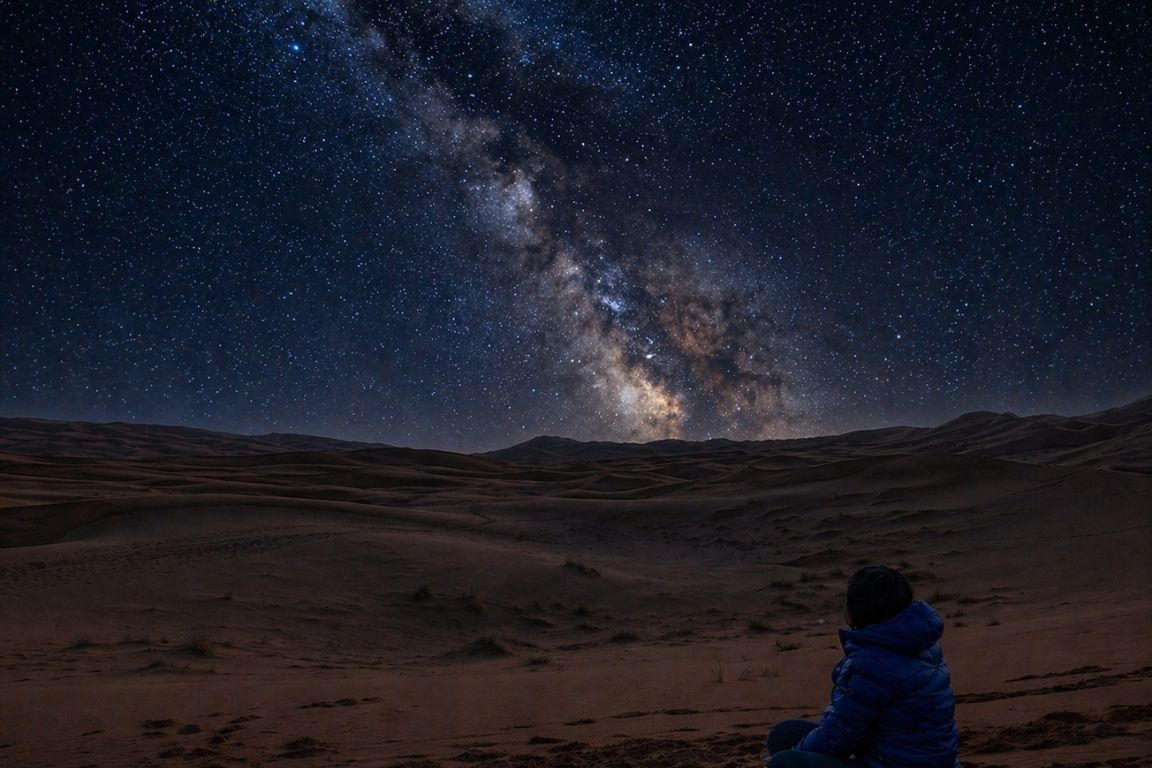
After the fire, the stars. Erg Chebbi dunes sit at Bortle Class 1-2 darkness – the deepest classification on the international dark-sky measurement system. The Milky Way is not a faint smear visible with averted vision. It is a dense, structured band across the full width of the sky, its dark dust lanes visible to the naked eye. Travelers who have never seen a dark sky before often simply stop moving when they look up for the first time. The scale is difficult to process.
The most useful thing to bring for night sky watching is not a telescope but a star identification app downloaded before you leave Marrakech. Point the phone at any part of the sky and it names what you’re seeing. Orion rises clearly from November. The Pleiades. Saturn’s rings visible through even cheap binoculars if you know where to point. And for anyone there in December, the Geminid meteor shower – up to 120 visible meteors per hour at peak – is perhaps the single most dramatic night sky event visible from a camping location anywhere in the world, observed from a place where the horizon runs completely unobstructed in every direction.
Trying to figure out which months balance comfortable temperatures with the best desert experience? Check out our best time to visit Marrakech desert tours guide before you lock in your dates.
What Should You Bring To A Desert Camp In Morocco?
Pack light, pack layered, and bring the few specific items that make the desert experience significantly better: a warm layer for sleeping, a large scarf for the camel ride, a headtorch for walking at night, toilet paper, hand sanitizer, and a fully charged phone with a star identification app downloaded before you lose signal. Everything else is optional or available at camp.
The scarf is the most versatile item. On the camel ride it protects your face and neck from wind and sand. After dark it keeps you warm around the fire. On the sunrise ride it becomes essential again. Moroccan markets in Marrakech sell good lightweight cotton and linen scarves for a few dollars – buy one before you leave the city if you don’t own one already.
The headtorch matters at standard camps where the path between tents and bathroom facilities is unlit sand. It also matters for anyone who wants to walk away from the camp in the dark to stargaze without the firelight competing. A small lightweight headtorch is better than a phone torch for this, it keeps your hands free and doesn’t kill your night vision.
Phone signal is unreliable to nonexistent at most desert camps. This is not a problem to solve, it is a feature of the experience. Download offline maps of the area, an offline star identification app (SkySafari and Star Walk both work without signal), and whatever entertainment or podcasts you want for the drive before leaving Marrakech. A power bank for charging is sensible. Most luxury camps have solar-powered electricity in the tents; most standard camps don’t or have it only in the communal dining area.
| Large scarf | Essential | Camel ride, wind protection, warmth after dark |
| Warm layer (fleece/jacket) | Essential Oct–March | Desert temperature drops fast after sunset |
| Headtorch | Strongly recommended | Unlit paths at night, stargazing without ruining night vision |
| Toilet paper + hand sanitizer | Essential | Not always provided; roadside stops rarely provide paper |
| Closed-toe shoes | Recommended | Sand fills open shoes; hot surface in afternoon |
| Star app (downloaded offline) | Recommended | No signal at camp – download before leaving Marrakech |
| Power bank | Recommended | Standard camps may not have charging; charge fully before leaving |
| SPF 50+ sunscreen + hat | Essential | Desert UV index regularly exceeds 12 |
| Camera | Optional | Phone cameras work well; proper cameras benefit from a tripod for night shots |
| Soft duffel bag | Recommended | Rolling luggage sinks immediately in sand; soft bags load onto camels |
Packing guidance verified April 2026
One thing not to bring: expectations of the wrong kind. The desert camp is not a hotel. Some discomfort is part of the experience – the cold, the sand in your shoes, the camel muscles you’ll feel tomorrow. These are not failures of the experience. They are the texture of a night genuinely spent somewhere extraordinary rather than simulated somewhere comfortable. Every traveler who returns from a desert camp carrying minor complaints also carries, underneath them, the memory of a night that will not leave them. That combination is the point.
Wondering whether a traditional headscarf is practical or just a tourist prop and what footwear actually works on sand dunes? This what to wear in Marrakech desert tours guide covers the clothing details most packing lists oversimplify.
What Our Travelers Tell Us About The Desert Camp Experience
After 9,100 travelers guided through desert camp stays since 2008, the patterns in what people remember and value are clear. The data below comes from our 2024 client groups.
| Travelers who rated the desert camp night “the highlight of the Morocco trip” | 94% |
| Most commonly cited memory from the camp experience | Stargazing (96%), Berber music (82%), sunrise (75%) |
| Travelers who said the food exceeded expectations | 85% |
| Travelers who said they were not prepared for how cold the night was | 62% (October–February departures) |
| Travelers who said one night was not enough | 78% |
Questions about which camp is the right fit for your group? We know every camp we use and exactly what each delivers. Compare what is included on the 3-day Sahara tour to Merzouga before you book – the listing shows the current camp tier.
Frequently Asked Questions
What is included in a Marrakech desert camp experience?
Most desert camp packages include the camel ride to camp, dinner (multi-course Moroccan meal), accommodation in a tent, breakfast, and the sunrise camel ride back. Activities like sandboarding are usually included at no extra charge. Quad biking and buggy excursions typically cost extra. Alcohol is generally not sold at camps but can be brought in – confirm with your operator when booking.
How cold does it get at a desert camp in Morocco?
Significantly colder than most travelers expect. October through March nights drop to between 5°C and 15°C depending on the month. December and January can touch near-freezing before dawn. Good camps provide adequate warm bedding, but travelers should pack a thermal layer to sleep in and a warm hat for the sunrise ride. The cold is part of the experience and makes the campfire and the morning tea feel like the most important things in the world.
Do you sleep outside at a desert camp?
You sleep in a tent, but some camps offer the option to sleep outside on the dunes themselves, under the open sky, with bedding arranged directly on the sand. This is popular in warmer months and genuinely extraordinary for stargazing. In October through March, the cold before dawn makes it challenging without a proper sleeping bag and warm layers. Ask your operator or camp about this option when booking.
Is there electricity at desert camps in Morocco?
Luxury camps run on solar power and have electricity in tents – lighting, phone charging, and sometimes heating or air conditioning. Standard camps typically have electricity only in the communal dining tent. Budget camps may have no electricity at all. Confirm with your operator which applies to your booking and bring a charged power bank regardless.
What time does the sunrise happen at a Sahara desert camp?
Sunrise at Erg Chebbi varies by season – roughly 6:30 am in December and January, 5:30 am in late spring. The sunrise camel ride departs 30-40 minutes before first light, so expect a 5-5:30 am departure in most months. It is the most important thing to not sleep through, and every guide who runs this route will make sure you’re up in time. Set a backup alarm regardless.
Can you drink alcohol at a Morocco desert camp?
Most camps don’t sell alcohol, as this reflects the Berber Muslim culture of the staff and operators. Travelers can bring their own – wine purchased in Marrakech, for example – and most camps will chill it and serve it. Confirm this with your specific camp before arriving. The desert is extraordinary without alcohol, and mint tea poured from height in the firelight is one of the most satisfying drinks available at any price point.
The desert camp night is the heart of every tour we run. We’ve been placing travelers in the right camps – the right position in the dunes, the right tier of comfort, the right season – since 2008. Start with the 3-day Sahara tour to Merzouga and Erg Chebbi if the camp night is what you want the itinerary built around.
Written by Yasmin Carter
Moroccan tour guide since 2008 · Founder, Marrakech Desert Tours
Yasmin has guided over 9,100 travelers through the Sahara, Atlas Mountains, and Moroccan desert routes since founding the agency.
Choose Your Marrakech Desert Trip
Have your travel dates in mind? Check this two-night Merzouga itinerary before arranging separate hotels and transport.
Compare Routes And Tailor Your Choice
General guidance until you choose. English is offered on these routes. All return to Marrakech; confirm the exact meeting point and option before payment.
Three days: Shared minibus, one Tinghir hotel night and one Erg Chebbi camp night. Outside camp toilets.
Four days, two desert nights: Shared standard or deluxe camp; Upgrade to Private supplies a private vehicle. Day four is a long return.
Four days, split return: Private transport, one camp night and two hotel nights. Private bathrooms; less time at the dunes.
One evening: Six-hour Agafay sunset, dinner and bonfire. Returns the same night; not the Sahara.
Four Days, Two Desert Nights
Two nights in Merzouga, camel rides, sandboarding and a nomad visit; choose Deluxe Camp for a private bathroom.
Shared vehicle unless Upgrade to Private is selected. Long return drive on day four. Drinks and tips extra.
Check Dates: Four Days, Two Desert Nights