How To Visit The Sahara Desert From Marrakech
Planning a Sahara trip from Marrakech? Learn travel time, best routes, tour costs, and how many days you really need for the full desert experience.
Choose the route and camp option together: three days, two desert nights, private transport and private bathrooms are different booking choices.
Booking Choice: Two nights in Merzouga, camel rides, sandboarding and a nomad visit; choose Deluxe Camp for a private bathroom. Explore Four Days, Two Desert Nights
Quick Facts: Sahara Desert From Marrakech
| Distance to Erg Chebbi (Merzouga) | ~550 km / 340 miles |
| Distance to Zagora (smaller dunes) | ~350 km / 217 miles |
| Driving time (Merzouga, direct) | 9-10 hours |
| Minimum recommended trip | 3 days / 2 nights |
| Best season | October to April |
| Budget group tour (3 days) | $150-$300 per person |
| Luxury private tour (3–4 days) | $500-$1,500+ per person |
| Main dune destinations | Erg Chebbi (Merzouga), Erg Chigaga (M’hamid) |
| Kid-friendly? | Yes, best for ages 5+ |
Prices verified April 2026
How Far Is The Sahara Desert From Marrakech?
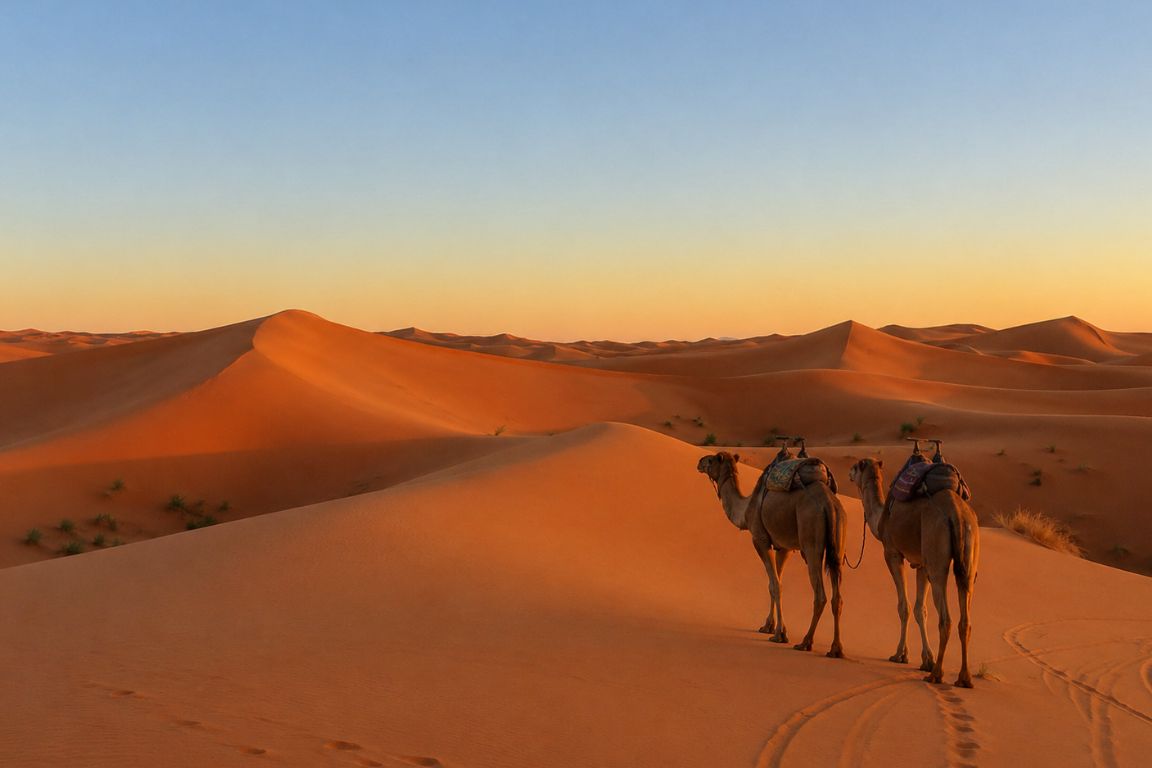 The Sahara doesn’t begin at Marrakech’s edge. The nearest proper sand dunes – Erg Chebbi near Merzouga – sit roughly 550 km (340 miles) to the southeast, a 9-10 hour drive through the High Atlas Mountains, the Draa Valley, and the pre-desert plains near Ouarzazate. The closer Zagora desert is around 350 km, about 6-7 hours, but the dunes there are significantly smaller and the experience is different.
This is the detail that surprises most first-timers. People arrive in Marrakech imagining they’ll see dunes from their riad rooftop. They won’t. The Sahara requires a real commitment – a full day of driving in each direction, minimum – and that’s actually part of what makes it so powerful. By the time you arrive at the edge of Erg Chebbi, you’ve crossed mountain passes, watched the landscape bleed from green valleys to rust-colored rock to open sand, and you understand in your body that you’ve traveled somewhere.
There’s also a third option that not everyone considers: Erg Chigaga, near M’hamid in the south. It sits about 520 km from Marrakech (roughly 9-10 hours including 60 km of off-road 4×4 terrain from M’hamid), and it’s one of the largest and least-visited dune systems in Morocco. No paved road gets you there. That remoteness is the point.
| Zagora (Erg Lihoudi) | ~350 km | 6-7 hours | Small rocky dunes, good for short trips |
| Erg Chebbi (Merzouga) | ~550 km | 9-10 hours | Towering orange dunes up to 150m, most iconic |
| Erg Chigaga (M’hamid) | ~520 km + 60 km off-road | 9-10 hours + 2 hours 4×4 | Vast, remote, least touristy |
Most travelers with 3-4 days aim for Erg Chebbi. It’s the one with the classic postcard dunes – deep orange, towering, and photographically extraordinary. If you have more time and want something wilder, Erg Chigaga rewards the effort significantly.
How Long Does A Sahara Trip From Marrakech Actually Take?
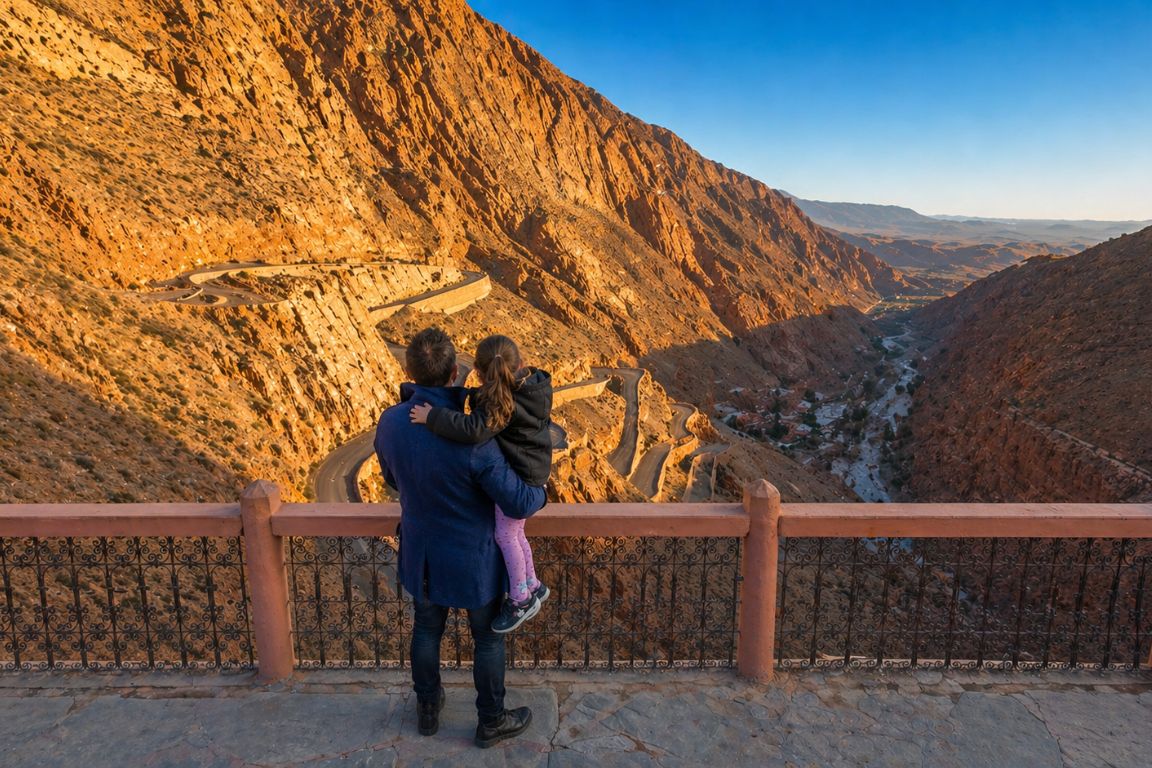 A realistic Sahara trip from Marrakech takes a minimum of 3 days and 2 nights to be worth the distance. One day is lost to driving each direction, which leaves you one night in the desert. Four to five days gives you breathing room, more time in the dunes, and the chance to actually explore instead of just pass through.
The 3-day format is the most popular for a reason: it works. Day one is the drive south, stopping at Aït Benhaddou and Ouarzazate, arriving at the dunes by late afternoon. Day two is entirely in the desert – sunrise, camel rides, camp life, sandboarding, sunset. Day three is the drive back. It feels rushed but it’s achievable, and for travelers with limited time in Morocco, it delivers the essential experience.
Where people go wrong is trying to do it in 2 days. You spend both days in the car and arrive after dark. You’re exhausted, the camel ride is rushed, and you’re back in Marrakech before you’ve really felt anything. It’s not worth it for Erg Chebbi. If two days is all you have, go to Zagora instead – the drive is shorter and the experience scales appropriately.
Four days is the sweet spot. A night en route (often in a beautiful kasbah in the Dadès Valley), two nights in the desert, and a less punishing return. We’ve run this trip over 9,100 times and the travelers who leave most satisfied almost always had at least 4 days. If you want a fixed itinerary rather than planning the route yourself, see the 3-day Sahara tour to Merzouga and Erg Chebbi.
Want to know the minimum time needed to make the Sahara trip genuinely worthwhile? Here’s our how many days do you need for Marrakech desert tours guide so you don’t cut it too short.
What Are The Best Times Of Year To Visit The Sahara From Marrakech?
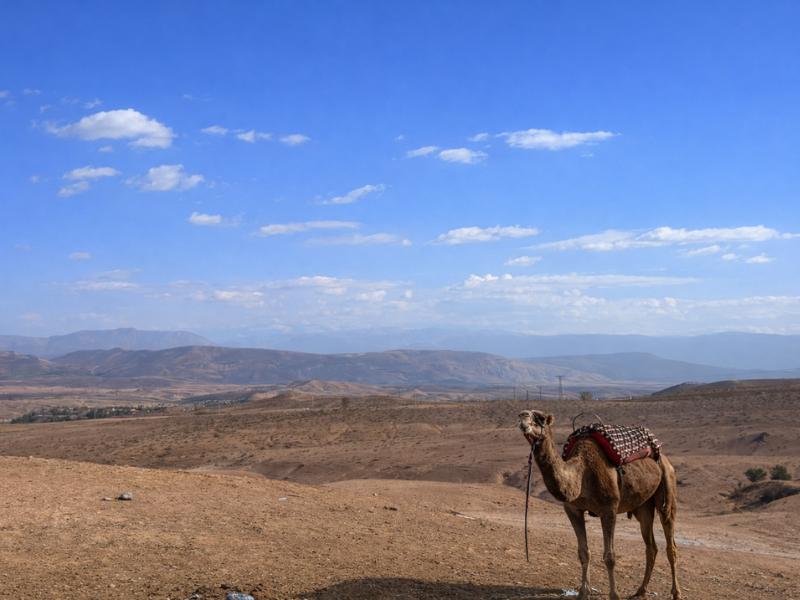
October through April is the optimal window for a Sahara trip from Marrakech. Daytime temperatures in the dunes stay between 20-30°C, nights are cold but manageable, and the light in October and March is extraordinary for photography. June through August should be avoided – highs regularly exceed 45°C and some camps close entirely.
Spring and autumn are the most popular for good reason. March through May brings warm days (22-28°C), occasional wildflowers in the valleys, and the desert at its most photogenic. The tradeoff: spring sandstorms are possible, particularly in April. They’re not dangerous if you’re with a guide who knows the terrain, but they do affect visibility and comfort.
October and November are arguably the best months overall. The brutal summer heat has broken. Crowds are lighter than spring. Nights are cool and clear, and the stargazing between October and April is unlike anything you’ll find near a city. Temperatures drop sharply after dark in all desert months – even in October, nights in the Sahara can reach near-freezing before dawn. That part catches travelers off guard every year.
| October-November | 25-30°C | 10-20°C | Best overall – ideal conditions, fewer crowds |
| December-February | 18-22°C | 0-8°C | Cold nights, magical stargazing, quiet desert |
| March-May | 22-32°C | 10-20°C | Excellent – watch for occasional sandstorms in April |
| June-September | 40-45°C+ | 25-30°C | Avoid – extreme heat, some camps closed |
One thing guidebooks consistently under-explain: winter nights in the Sahara are genuinely cold. Not “bring a light jacket” cold. Temperatures drop below 5°C regularly in December and January, sometimes to zero. If you’re traveling in winter, pack actual warm layers – a thermal base, a fleece, and a proper jacket. The afternoon will fool you completely.
Not sure when to go to avoid the worst of the Sahara heat without missing the most dramatic desert conditions? Here’s our best time to visit Marrakech desert tours guide so you time it right.
What Route Do You Take From Marrakech To The Sahara?
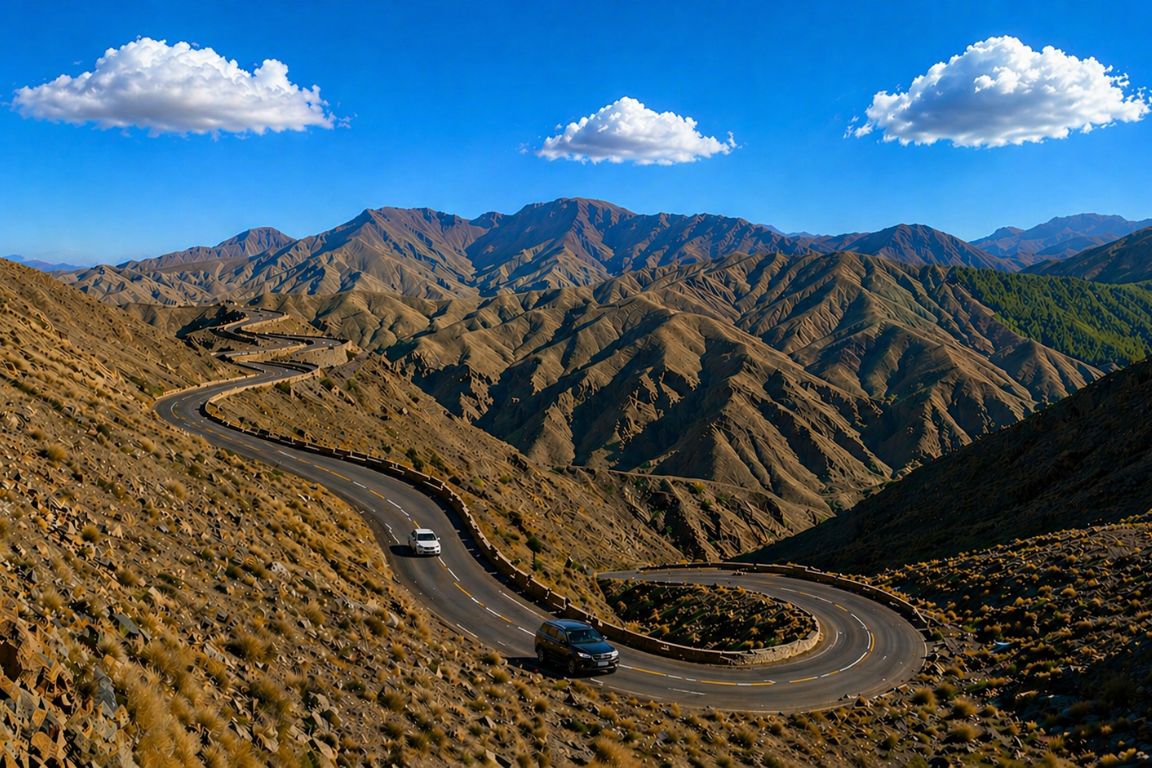 The main route from Marrakech to Erg Chebbi follows the N9 highway southeast through the High Atlas Mountains, crossing the Tizi n’Tichka pass at 2,260 metres before descending to Ouarzazate. From there the road continues through Boumalne Dadès, Tinghir, and Erfoud before reaching Merzouga. The full drive runs around 550 km and takes 9-10 hours without stops.
The road itself is in excellent condition – significantly better than it was a decade ago. The Atlas crossing is winding, with sharp switchbacks and steep drops, but it’s the kind of dramatic mountain scenery that makes you understand why this journey is part of the experience. If you’re prone to motion sickness, take precautions before leaving Marrakech. The first two hours through the mountains are the most demanding.
The stops along this route are genuinely worth building in, not just checking off. Aït Benhaddou is a UNESCO World Heritage site and one of the best-preserved kasbahs in Morocco, it was the filming location for Gladiator, Game of Thrones, and dozens of other productions. Most tours stop here for an hour on day one. The Dadès Gorge comes later, with its dramatic canyon walls and sharp curves. These aren’t filler stops. They’re the reason a 4-day tour beats a 3-day one.
For Erg Chigaga via M’hamid, the route goes south through the Draa Valley – a long corridor of date palms and oases that feels like the world transitioning in slow motion from mountain to desert. The last 60 km to the dunes are off-road and require a 4×4. Guides handle the logistics and the navigation on this stretch; the desert this far south has no road signs and the tracks shift with the dunes. The arranged alternative on paved roads is the 3-day tour to Merzouga and Erg Chebbi.
What Do Most Travelers Get Wrong About The Sahara Trip?
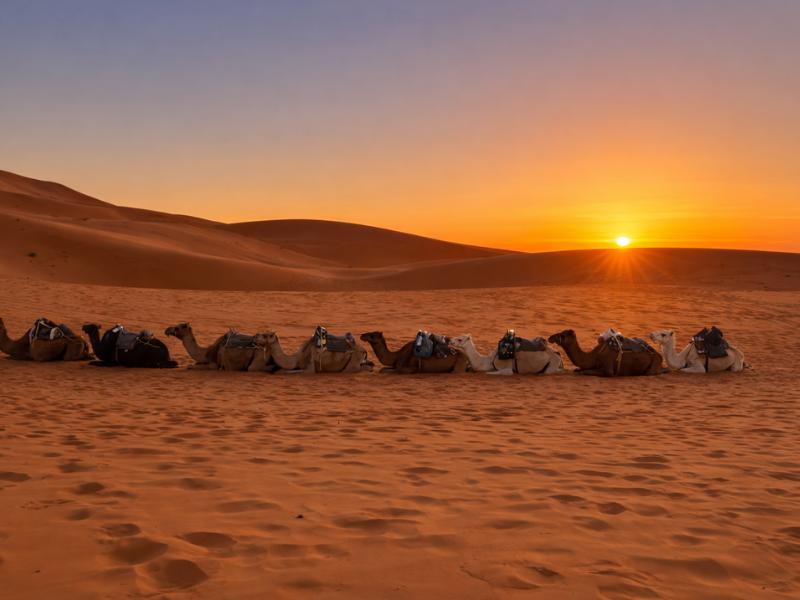
The most common mistake is underestimating the driving. Many travelers plan one night in the desert without realizing both days get largely consumed by the car. The second most common mistake is skipping the layers – the desert cold surprises almost every first-timer. A third pattern: choosing the cheapest available tour, then being disappointed by basic camps, poor guides, and rushed timelines.
Here’s what the people who have the best experiences do differently. They plan for 4 days minimum, not 3. They bring more warm clothing than they think they need – a scarf, a fleece, actual warm socks. They book in advance during October through April, because good camps and private vehicles fill up, especially around holidays. And they treat the drive as part of the trip rather than an obstacle to it.
The fail points we see consistently, across thousands of travelers, cluster in a few places. First: arriving after dark. If your route is too ambitious, you miss the sunset camel ride and the golden light on the dunes. Sunset is the whole point of that first afternoon. Arrive before 4 pm if you can. Second: not asking what’s actually included in tour pricing. Some budget packages list “camel ride” and mean a 20-minute walk around the camp perimeter, not a proper sunset trek into the dunes. Ask explicitly. Third: choosing a camp for its photos online rather than its position. Some camps are right next to the road and the town. The best ones put you deep enough that you can’t see lights or hear vehicles. Distance from other camps matters more than interior decoration.
The 3-day Merzouga and Erg Chebbi tour is a packaged version of this route, which covers the main logistics before you leave Marrakech. The planning calls take 15 minutes and prevent most of the common problems before they start.
How Much Does A Sahara Trip From Marrakech Cost?
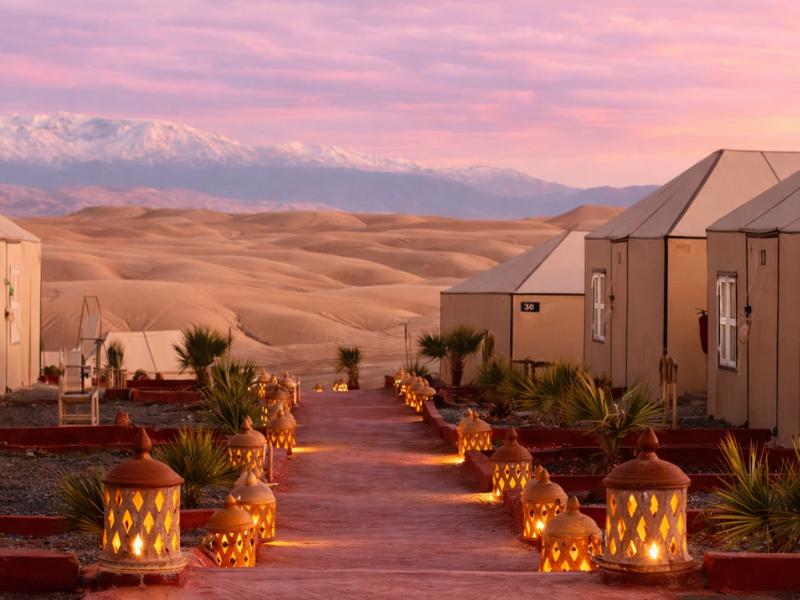
A 3-day shared group tour from Marrakech to the Sahara costs roughly $150-$300 per person, including transport, overnight accommodation, meals, and camel trekking. A private 3-day tour runs $350-$600 per person. Luxury private experiences – premium camps, private 4×4, exclusive guides – start around $500 and can reach $1,500 per person for multi-night arrangements.
The price range exists because the experiences are genuinely different. Budget group tours work. They’re not scams. But you’re sharing a vehicle with 6-8 strangers, the camps are basic (sometimes tents on the ground rather than proper beds), and the itinerary moves fast. For solo travelers or couples on a budget, they can be excellent. For families, honeymooners, or anyone who wants flexibility, private is almost always worth the difference.
| Budget group (3 days) | $150-$300 | Shared 4×4, basic camp, meals, camel ride |
| Mid-range private (3 days) | $350-$600 | Private vehicle, comfort camp with beds, all meals, guide |
| Luxury private (3-4 days) | $600-$1,500+ | Private 4×4 with A/C, luxury tent with ensuite, gourmet meals, exclusive camp |
| Camel trekking only (standalone) | $20-$90 | Sunset ride to basic or luxury overnight camp |
Prices verified April 2026
One thing worth knowing: the shoulder season (June-August) offers discounts of 20-30% at most camps because the heat drives down demand. If extreme heat is manageable for you or you plan to be active only at dawn and dusk, this can be real value. For everyone else, stick to peak season and book at least 6-8 weeks ahead for October, March, and April.
What Does A Night In A Sahara Desert Camp Actually Feel Like?
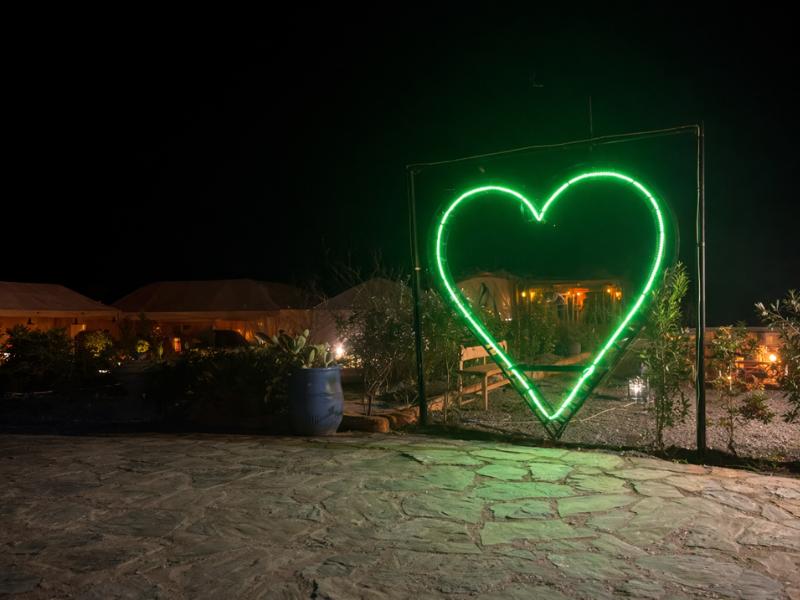
A night in a Sahara camp is one of those experiences that sounds like a cliché until you’re actually in it. The silence is total. The sky does things you won’t expect. The temperature drops fast after sunset. You’ll sleep poorly and remember it for years.
It starts with arrival – typically late afternoon, specifically timed so you hit the dunes just before sunset. The camel ride in is slow and rocking, the light already turning gold. The dunes don’t look like photographs. They look larger and quieter, and the color changes fast: orange to amber to a soft rose that lasts about four minutes before the sky takes over.
The camp itself varies significantly by what you’ve booked. At the budget end, you get a Berber-style tent – low to the ground, layered with rugs, simple bedding. Not uncomfortable, but genuinely rustic. Luxury camps go much further: proper beds, private bathrooms, solar-powered lighting, hot water. Some have pools. The architecture is always canvas and wood, always set into the dunes, always facing away from the road. The good ones feel completely isolated even when other camps are nearby.
We’ve put together a full sanitation breakdown in our toilets on Marrakech desert tours guide so you know exactly what to expect and how to prepare regardless of which camp you book.
Dinner is communal. Tagine, flatbread, mint tea, sometimes couscous. After dinner, someone brings drums. The staff at most camps are Berber musicians when they’re not guiding or cooking, and the evening music by a small fire under a desert sky is one of those travel moments that doesn’t translate to video. It has to be felt.
The thing nobody tells you: bring water to your tent. Some camps don’t stock it inside, and getting up at 3 am thirsty in the desert dark, navigating soft sand to a common area, is less romantic than it sounds. A small headtorch matters more than most people pack. And the cold. The cold before dawn is real – the kind that wakes you up around 5 am and turns out to be the reason everyone else is already outside watching the sky shift from black to purple to pink over the dunes. The sunrise ride back, if you take it, is the best 40 minutes of the whole trip.
Questions about which camp to choose, which dune system to visit, or how to structure your nights in the desert? The 3-day Erg Chebbi tour is the standard first-timer format, with the camp night already built in.
Desert camps in Morocco vary wildly between budget and luxury – our Marrakech desert camp experience in Morocco guide breaks down what each level actually delivers and whether the premium is worth it.
What Should You Pack For A Sahara Desert Trip From Marrakech?
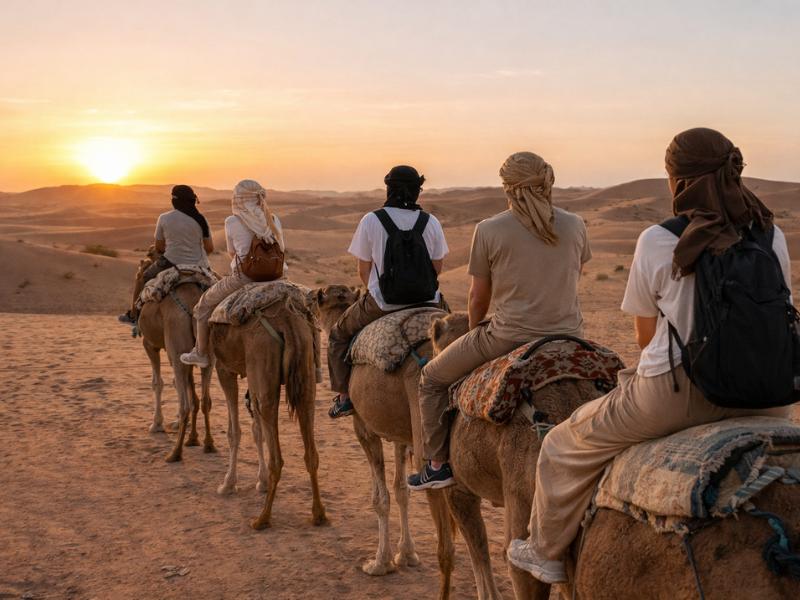
Pack for two climates on the same day. The Sahara afternoons can hit 30°C in shoulder season; the same desert at 5 am can be near-freezing. You need sun protection, light daytime layers, a proper warm mid-layer, and a scarf that doubles as sand protection and a wind buffer.
The scarf matters more than most items. Sand gets everywhere – into your camera, your hair, the back of your throat on a windy day. A loose cotton or linen scarf that wraps around your face protects you on camel rides and also keeps you warm after sunset. Moroccan markets in Marrakech sell them for a few dollars and the guides wear them constantly for good reason.
What to bring, practically: sunscreen (SPF 50+), a reusable water bottle, lip balm (the desert air dries lips within hours), comfortable closed-toe shoes for walking on sand, and a small backpack for the camel ride. Don’t bring rolling luggage to the desert. It sinks into the sand immediately. A duffel or soft bag that can be loaded onto a 4×4 or camel saddle is far more practical.
Cash matters here. Desert camps don’t have banking facilities. ATMs in Merzouga exist but aren’t always reliable. Pull Moroccan dirhams in Marrakech before you leave – 20-50 dirhams (about $2-5 USD) per service for tipping guides, camp staff, and camel handlers is standard and appreciated.
Not sure what to pack for a trip that goes from scorching Sahara days to surprisingly cold desert nights? Here’s our what to wear in Marrakech desert tours guide so you pack the right things.
Can You Take Kids On A Sahara Desert Tour From Marrakech?
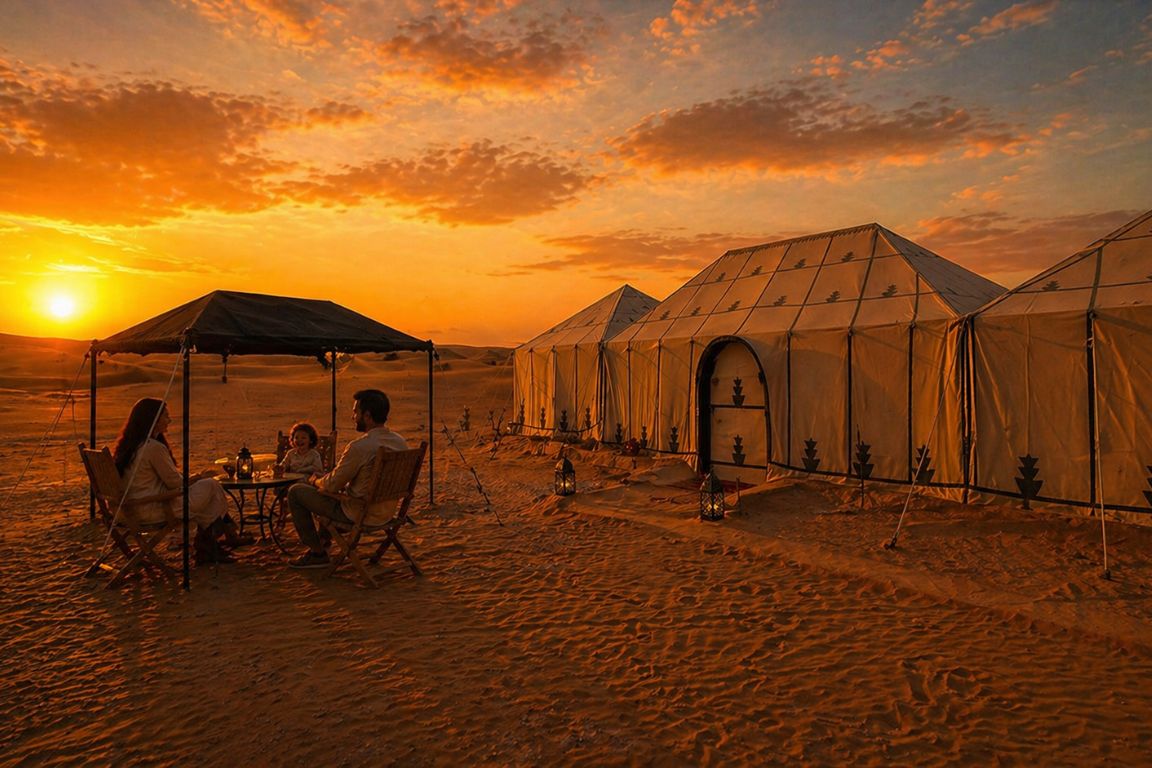 Yes, a Sahara trip with children is absolutely doable and often becomes the highlight of the whole Morocco holiday for families. The key variables are age, trip length, and structure. Kids under 5 find the long drives difficult; kids 5 and up tend to thrive. The desert itself – sandboarding, camels, campfire music, fossils, stars – hits differently through a child’s eyes.
The drive is the honest challenge. Nine to ten hours each way is a long time for children in a car, even broken across two days with stops. For very young children, some families opt for a private vehicle and a more flexible pace, with extra breaks built into the route. Others choose Zagora over Merzouga for the shorter drive. A few families skip the full Sahara trip and do the Agafay Desert instead – a rocky desert plateau 40 minutes from Marrakech that offers a toned-down desert experience without the journey.
For children roughly 5-12, the trip is genuinely magic. Sandboarding down a 150-metre dune is as good as any theme park. Fossil hunting near Erfoud – where kids find and keep real 200-million-year-old trilobites – is the kind of experience that turns into a school project. The camel ride at sunset. The drumming around the fire. Stars so dense and close overhead that children stare in silence, which is how you know something has actually landed.
A few practical things for families: children under 5 or 6 generally ride with a parent on camels rather than solo. Most reputable luxury camps charge half-price or nothing for children under 6 or 7. Private vehicles are strongly recommended over group tours – the flexibility to stop when someone needs a break, or to adjust the pace around nap times, is worth the cost difference. Pack entertainment for the car days, but also give kids the window time. The High Atlas crossing, the palm-lined Draa Valley, the first sight of orange sand on the horizon – these are not things to miss behind a screen.
Taking kids into the Sahara needs more planning than a standard desert trip – our can kids do Marrakech desert tours guide breaks down the age considerations, heat management, and family-friendly operator options worth knowing about.
What Our Travelers Tell Us: Patterns From The Desert
After 9,100 travelers guided since 2008, certain patterns appear clearly. The numbers below come from our 2024 client groups.
| Travelers who chose 4+ day tours vs 3-day | 92% rated the experience “exceeded expectations” vs 65% on 3-day tours |
| Most common regret cited | 78% wished they had booked more nights in the desert |
| Families who rated trip “best part of Morocco holiday” | 85% |
| Travelers who said they were unprepared for cold nights | 62% (October–February departures) |
| First-time Morocco visitors who returned for another trip within 3 years | 40% |
Frequently Asked Questions
Can you do a day trip to the Sahara from Marrakech?
No. The drive to Erg Chebbi is 9-10 hours each way – a day trip is physically impossible. Even Zagora, the closer desert, takes 6-7 hours one way. The minimum realistic trip to any proper dunes is 2 days, and 3 days is what we’d recommend as the honest minimum.
Is it safe to visit the Sahara desert in Morocco?
Yes. Morocco’s southern desert routes are well-traveled and safe for tourists. Roads to Merzouga are fully paved and in good condition. For off-road areas like Erg Chigaga, reputable tour operators with experienced guides and properly equipped 4×4 vehicles are essential – not for danger, but for navigation and logistics in terrain that doesn’t have road signs.
What is the difference between Erg Chebbi and Erg Chigaga?
Erg Chebbi (Merzouga) is more accessible, more developed, and home to Morocco’s most iconic orange dunes – up to 150 metres high. Erg Chigaga (M’hamid) is larger, wilder, and requires 60 km of off-road travel to reach. It has far fewer tourists and a more remote feel. Both are extraordinary. Erg Chebbi is the right choice for first-timers or those with limited time; Erg Chigaga rewards repeat visitors or adventurous travelers.
Do you need a guide to visit the Sahara from Marrakech?
You don’t legally need one, but practically you do. The drive alone is 9–10 hours through complex mountain and desert terrain. The off-road segments near some dune systems require local knowledge. And the cultural stops, accommodation, and camp logistics are genuinely complex to arrange independently without Moroccan contacts. Almost every traveler who attempts it solo spends more than they’d have paid for a tour and gets less out of the experience.
What should I wear in the Sahara?
Light, loose clothing during the day – linen or cotton, long sleeves for sun protection. A warm fleece or jacket for evenings and early morning. Closed-toe shoes for walking on sand. A large scarf for your face and neck during camel rides and on windy days. Avoid sandals in the dunes – sand gets into open shoes immediately and the surface can be uncomfortably hot underfoot in midday.
What is the best tour length for a first Sahara visit?
Four days is ideal. It gives you one comfortable night en route (typically in a kasbah hotel in the Dadès Valley or near Ouarzazate), two nights in the desert, and a return that isn’t completely consumed by driving. Three days works if your schedule demands it. Two days to Erg Chebbi does not, realistically, give you a proper desert experience.
We’ve been running these routes since 2008 – the Tizi n’Tichka pass at dawn, the first sight of Erg Chebbi on the horizon, the campfire music after dark. If you want the route, camp, and transfers handled as one booking, use the 3-day Sahara tour from Marrakech to Merzouga.
Written by Yasmin Carter
Moroccan tour guide since 2008 · Founder, Marrakech Desert Tours
Yasmin has guided over 9,100 travelers through the Sahara, Atlas Mountains, and Moroccan desert routes since founding the agency.
Choose Your Marrakech Desert Trip
Have your travel dates in mind? Check this two-night Merzouga itinerary before arranging separate hotels and transport.
Compare Routes And Tailor Your Choice
General guidance until you choose. English is offered on these routes. All return to Marrakech; confirm the exact meeting point and option before payment.
Three days: Shared minibus, one Tinghir hotel night and one Erg Chebbi camp night. Outside camp toilets.
Four days, two desert nights: Shared standard or deluxe camp; Upgrade to Private supplies a private vehicle. Day four is a long return.
Four days, split return: Private transport, one camp night and two hotel nights. Private bathrooms; less time at the dunes.
One evening: Six-hour Agafay sunset, dinner and bonfire. Returns the same night; not the Sahara.
Four Days, Two Desert Nights
Two nights in Merzouga, camel rides, sandboarding and a nomad visit; choose Deluxe Camp for a private bathroom.
Shared vehicle unless Upgrade to Private is selected. Long return drive on day four. Drinks and tips extra.
Check Dates: Four Days, Two Desert Nights